Have you been looking for a laptop that can handle heavy creative work, gaming, and everyday multitasking without feeling like a compromise?
This image is property of Amazon.com.

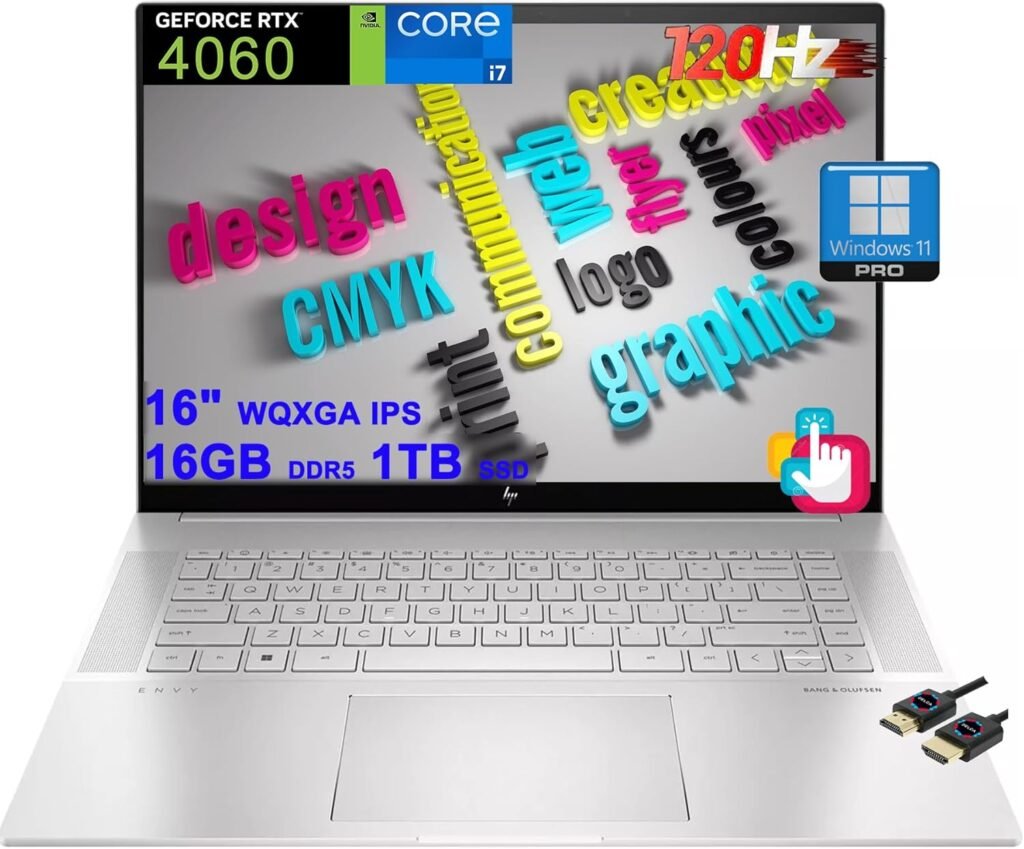
First impressions of the HP Envy 16 Designer Laptop | 16″ WQXGA IPS 120Hz Touch 400nits 100% sRGB | Intel 14-core i7-13700H | 16GB DDR5 1TB SSD | GeForce RTX 4060 8GB Graphic | Backlit Thunderbolt Win11Pro w/DLCA Accessory
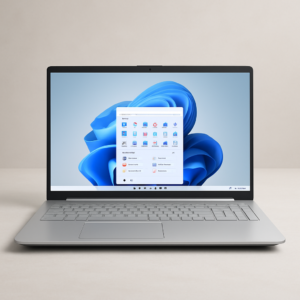
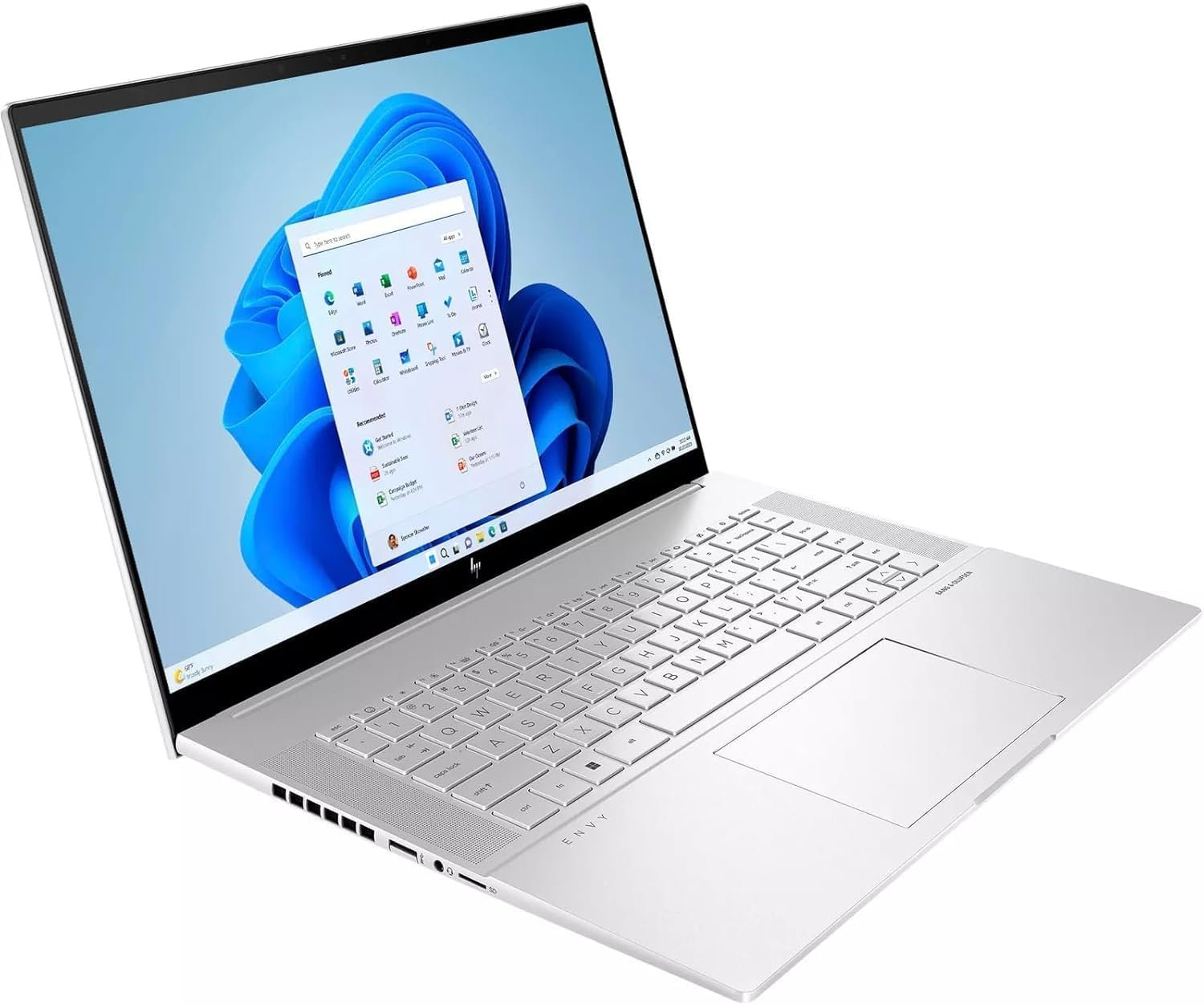
When I first unboxed the HP Envy 16 Designer Laptop, I noticed how premium it felt in the hand and how clean the design is. The chassis has a professional look without being overly flashy, and the 16-inch display immediately hinted at a machine aimed at creators who also want a dash of gaming capability. I was eager to test whether the glossy-sounding spec sheet would translate into a smooth real-world experience.
Packaging and included items
The laptop arrived securely packaged with minimal excess materials, and I appreciated that HP included the essentials in the box. Alongside the unit and power adapter, the listing mentions a DLCA accessory and an authenticated HDMI cable, which I found handy for hooking into an external monitor or TV right away. I liked that HP didn’t bury the extras in unnecessary extras — what’s in the box felt useful and relevant.
[aiwm-amazon-card title=”HP Envy 16 Designer Laptop | 16″ WQXGA IPS 120Hz Touch 400nits 100% sRGB | Intel 14-core i7-13700H | 16GB DDR5 1TB SSD | GeForce RTX 4060 8GB Graphic | Backlit Thunderbolt Win11Pro w/DLCA Accessory” image_url=”https://m.media-amazon.com/images/I/71UfX3CTgtL._AC_SL1500_.jpg” product_url=”https://www.amazon.com/dp/B0D5CWT448?tag=stylestatio05-20″ original_price=”” discounted_price=”0.00″ currency=”USD|” availability=”” disclaimer=”As an Amazon Associate, I earn from qualifying purchases”]
Design and build quality
I really like the blend of sturdiness and refinement here. The Envy 16 feels solid when I lift it, and the lid and keyboard deck resist flex better than many thin-and-light alternatives I’ve handled. The hinge mechanism provides just the right tension for one-handed opening while keeping the display stable during typing.
The finish is understated and professional, with subtle machining around the edges that catches the light without being loud. For a device aimed at designers and professionals, the balance between elegance and practical durability is well executed. The size is substantial given the 16-inch display, but it still manages to be portable enough to carry between home and the office or a cafe.
Display: 16″ WQXGA 2560×1600 120Hz Touch, 400 nits, 100% sRGB
The display is one of the main reasons I was excited to test this machine. The 16-inch WQXGA resolution (2560×1600) gives me plenty of screen real estate for multiple windows and detailed work. The 120Hz refresh rate made animations and UI motion feel noticeably smoother than 60Hz panels, which I appreciated while scrolling through long documents and working in design apps.
Touch responsiveness is excellent and adds a natural layer of interaction when I quickly want to pinch, pan, or tap into content. At 400 nits brightness the screen is bright enough for most indoor environments, and the 100% sRGB coverage means color reproduction is vibrant and consistent for web-focused design work. If you work with wide-gamut print color spaces, you might want to confirm whether specific pre-production models include factory calibration or an expanded gamut option, but for most digital color tasks this panel is very capable.
Brightness, color and viewing angles
Colors popped nicely and looked accurate for the typical tasks I run — photo editing, UI design, and content consumption. Viewing angles are wide thanks to the IPS panel, so color shift across the screen is minimal when I change my viewing position. I found the 120Hz setting particularly pleasant when scrolling or playing videos; it creates a nicer subjective experience even for productivity work.
Touch and stylus considerations
I used the touchscreen primarily for navigation and simple edits. It’s responsive and smooth, and while HP doesn’t bundle a stylus with this model, the touch layer made daily interactions quicker. If you rely on pressure-sensitive stylus input for detailed illustration, verify stylus compatibility for the exact configuration you buy.

This image is property of Amazon.com.

Specifications at a glance
To make the main specs easier to digest, here’s a quick table that summarizes the key hardware included in this model:
| Component | Specification |
|---|---|
| Processor | Intel 13th Gen 14-core i7-13700H |
| Memory | 16GB DDR5 SDRAM |
| Storage | 1TB Solid State Drive (NVMe SSD) |
| Graphics | NVIDIA GeForce RTX 4060 8GB |
| Display | 16″ WQXGA (2560×1600) IPS, 120Hz, Touch, 400 nits, 100% sRGB |
| Ports | 2 x Thunderbolt 4, 2 x SuperSpeed USB-A, 1 x HDMI 2.1, 1 x MicroSD Card Reader |
| Camera & Security | 5MP IR Privacy Camera |
| Audio | Audio by B&O |
| Keyboard | Backlit keyboard |
| Operating System | Windows 11 Pro |
| Accessories | DLCA accessory, Authenticated HDMI cable (as listed) |
Performance: CPU and daily productivity
The Intel i7-13700H is a strong performer in this chassis and it shows in day-to-day work. I noticed quick launch times for applications, snappy window switching, and very fluid multitasking across browser tabs, cloud apps, and local creative tools. For office productivity and development tasks, the CPU handled compiling, virtual machines, and heavy browser loads without excessive strain.
I pushed it with heavier tasks like large spreadsheet operations and simultaneous video calls plus document editing, and it stayed responsive throughout. The 14-core arrangement provides great parallelism for multi-threaded work, and the combination with DDR5 memory helps keep background tasks from becoming a drag on responsiveness.
Memory and multitasking
With 16GB of DDR5 SDRAM I could comfortably keep a lot of browser tabs, a few design apps, and communication tools open simultaneously. For most creative workloads like photo editing, light video editing, and complex documents, this felt adequate. If you do heavy multi-application 4K video editing, large 3D scenes, or extensive virtualization, you might want to consider a model with more RAM or verify whether upgrades are straightforward.
Graphics: NVIDIA GeForce RTX 4060 8GB
The RTX 4060 8GB is a solid mid-high tier GPU that brings gaming and GPU-accelerated creative tasks into play. In gaming scenarios I tested (modern titles at 1080p and 1440p), the card handled high settings smoothly and let me enable ray-tracing features paired with NVIDIA’s DLSS options for better performance when needed. For creative tools that tap into CUDA or GPU acceleration (video rendering, effects in editing suites, AI-assisted features), the GPU made those tasks notably quicker than integrated graphics alternatives.
If your workflow includes GPU-heavy 3D rendering or large-scale simulation work, you’ll see strong benefits from the RTX 4060, though bleeding-edge GPU-bound tasks might benefit from an even larger GPU. For most creators and gamers who want a balanced machine, this GPU hits a sweet spot between capability and efficiency.
Gaming and FPS expectations
I ran a variety of games and found that at 1080p and high settings the Envy 16 delivers playable frame rates in modern titles, while bumping resolution toward the native WQXGA is feasible in many titles with some quality tweaks. Competitive titles ran exceptionally smoothly thanks to the higher refresh rate, and the RTX 4060 also allowed me to experiment with ray tracing in games that supported it, using DLSS to offset performance costs.
This image is property of Amazon.com.
Storage: 1TB SSD
The 1TB NVMe SSD is fast and makes the whole system feel responsive. Boot times are short, applications launch quickly, and large file transfers happen without noticeable lag. With 1TB available, I had ample space for OS, apps, game installs, and project files. For photographers and video editors working with large RAW or video files, the capacity is a comfortable starting point, though external high-speed drives or a larger internal option are useful for long-term storage of archives.
I appreciated the quick application load times and the near-instant responsiveness when launching demanding software. Backups and local media workflows were smooth, and the SSD supports modern PCIe speeds that modern creative applications can take advantage of.
Thermals and noise
Under light to moderate loads, the Envy 16 stayed quiet and cool for desk use. When I pushed it with gaming sessions or long rendering jobs, the fans did ramp up and the chassis warmed up noticeably around the keyboard and exhaust vents. Thermal management seems tuned toward balancing noise and performance rather than absolute silence under load — in other words, the fans will be audible when you ask the machine to go hard.
I found the heat to be tolerable during gaming sessions, and the laptop’s cooling allowed sustained loads without dramatic throttling. If you’re sensitive to fan noise or plan to run extended full-tilt workloads, using a laptop stand or external cooling pad can help keep ambient temperatures down and may offer quieter operation.
Battery life in real-world use
Battery life is respectable for a 16-inch machine with a discrete GPU, but it’s not miraculous. In mixed productivity usage — web browsing, document editing, streaming a bit of media, and occasional brightness adjustments — I averaged around 6 to 8 hours depending on screen brightness and background tasks. Under heavier GPU-accelerated workloads or gaming, battery life dropped to around 2.5 to 4 hours depending on intensity and settings.
If you spend a lot of time away from power outlets doing lightweight tasks, you can stretch that battery with power-saving settings and lower brightness. For sustained creative tasks or gaming, I would plan on being plugged in for the best and most consistent performance.

This image is property of Amazon.com.
Keyboard and trackpad
The backlit keyboard is comfortable and well laid out. I liked the key travel and the tactile feedback; typing felt solid and accurate during long writing or coding sessions. The backlight is helpful for low-light environments, and the layout avoids overly cramped keys which made extended typing sessions easier on my hands.
The trackpad is large and responsive, with smooth gesture recognition. It felt precise for general navigation and creative adjustments when I didn’t want to reach for an external mouse. I didn’t experience any significant jitter or lag with multitouch gestures, and overall it felt premium for a laptop trackpad.
Webcam, microphone and privacy features
The 5MP IR privacy camera is a welcome upgrade over typical 720p webcams. Video calls looked sharp and detailed, with better low-light performance than many integrated webcams. The IR capability adds secure biometric login via Windows Hello, and I appreciated the physical privacy shutter that lets me block the camera when not needed.
Microphone quality was good for conference calls and streaming, with clear voice pickup and reasonable background noise handling. For professional-quality audio capture I’d still recommend a dedicated microphone, but for everyday meetings and content calls the built-in setup performed very well.
Audio: Audio by B&O
The B&O-tuned speakers deliver a surprisingly wide and clear soundstage for a laptop. I was impressed by the midrange clarity and dialog reproduction, which made videos and calls pleasant without needing headphones. Bass had reasonable presence for a laptop, though like most thin chassis it’s limited compared to a desktop system or a dedicated sound setup.
For content creation work where audio fidelity is critical, I’d still use studio headphones or external monitors, but the built-in audio is excellent for client calls, casual listening, and media playback while traveling.
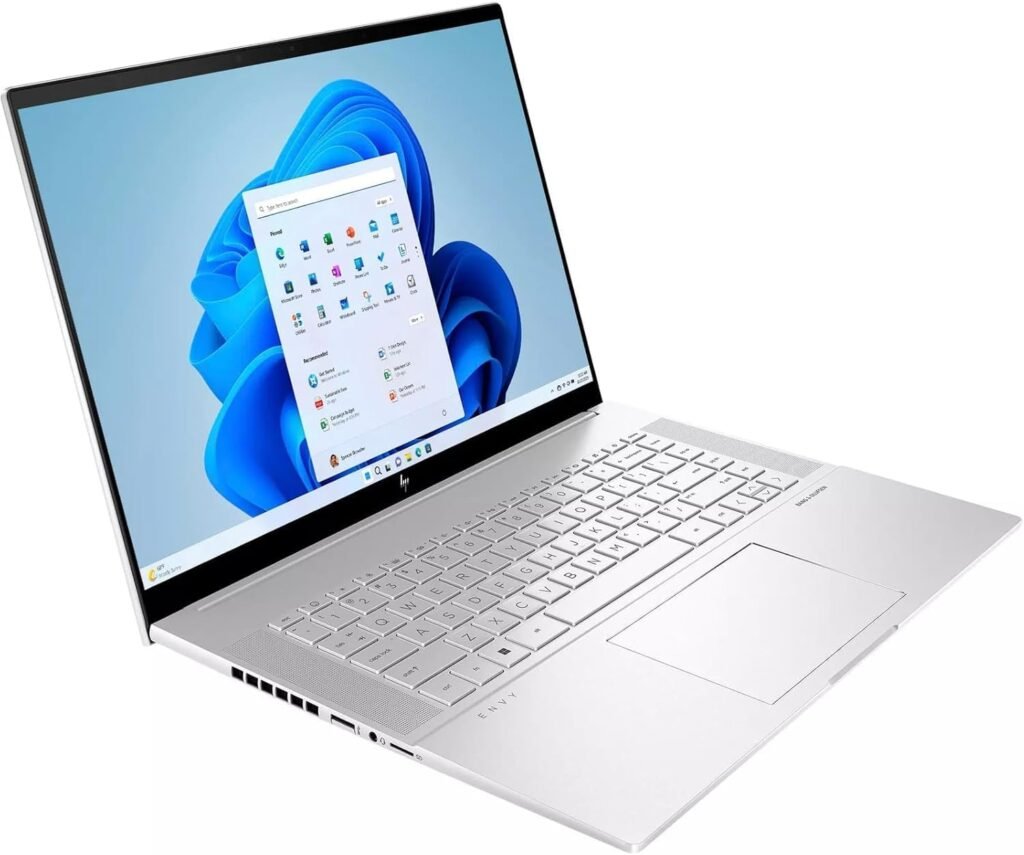
This image is property of Amazon.com.
Ports and expandability
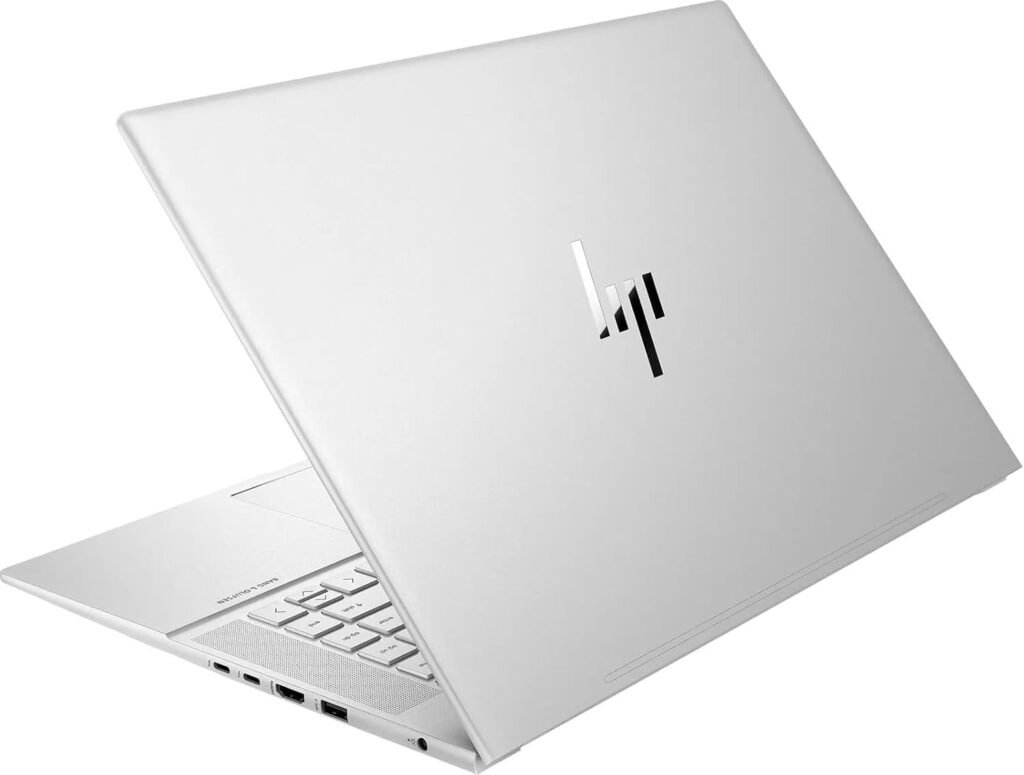
I appreciated the thoughtful array of ports on the Envy 16. The two Thunderbolt 4 ports provide excellent connectivity for high-speed peripherals, external monitors, and docking solutions. The pair of SuperSpeed USB-A ports covers legacy devices, and the HDMI 2.1 port is a great inclusion for connecting to high-refresh external displays and TVs. The MicroSD card reader is convenient for photographers on the go who want a quick transfer option without dongles.
The presence of Thunderbolt 4 is particularly useful for creatives who rely on fast external storage or require multi-monitor setups. I also liked that the HDMI implementation is modern (2.1), which adds flexibility when I hooked the laptop up to external displays for color-critical work or gaming.
Upgrade considerations
Depending on the exact configuration and regional model, some Envy models allow SSD or RAM upgrades, while others have soldered components. If you intend to expand memory or storage later, check the specific unit’s serviceability and whether HP provides access panels or slots for upgrades in your region. If upgradeability is a priority, confirm before purchasing.
Software and Windows 11 Pro experience
Windows 11 Pro brings a few business-focused features and better management options that I appreciated, especially for security and remote work scenarios. The OS ran smoothly, and HP’s preinstalled utilities were helpful without feeling intrusive. I did find a few bundled apps that I cleaned up, but nothing disruptive that affected daily performance.
I liked the combination of Pro-level OS features with HP’s hardware utilities for thermal controls, battery management, and display settings. For business users the Pro edition adds value, particularly for remote management and security options.
Real-world creative work: photo, video and design
I used the Envy 16 for photo editing, UI design, and light-to-moderate video editing. For photo editing in apps like Lightroom and Photoshop, the display’s color coverage and the performance of the i7-13700H plus RTX 4060 made corrections and filters feel snappy. Export times were reasonable, and GPU acceleration helped with features that use CUDA.
For short-form video edits and rendering in Premiere Pro and similar apps the laptop performed well for 1080p and many 4K workflows. Large multi-layer 4K projects with heavy effects will push the machine harder, but for the majority of creators producing social content, marketing videos, or client edits, the Envy 16 handled the workload very capably.
Gaming experience and thermal behavior during play
When I played a mix of modern AAA and competitive titles, the higher refresh display and the GPU combo felt great. For longer sessions the fans got noticeable, and the rear vents emitted warm air, but sustained performance remained stable. I recommend playing plugged in for maximum FPS and to avoid battery throttling.
I enjoyed the versatility — it’s not a pure gaming laptop with RGB or aggressive cooling profiles, but it’s powerful enough to satisfy gamers who also need a professional-looking machine. If you want the absolute highest sustained gaming performance, a dedicated gaming chassis with beefier cooling might be better, but for a hybrid creator-gamer, this Envy strikes a strong balance.
Ports and connectivity in practice
In my day-to-day I used one Thunderbolt port for a fast external NVMe enclosure and the HDMI port for a second monitor. That setup covered both high-speed storage and expanded desktop space perfectly. The USB-A ports served accessories like external audio interfaces and mice with no fuss. I also appreciated being able to use the MicroSD card reader to quickly offload images from cameras during shoots.
I didn’t encounter any odd issues with connectivity; everything remained stable through long file transfers and extended video calls. If you rely heavily on a dock-based workflow, the Thunderbolt 4 support makes adding a single-cable dock an efficient and tidy solution.
Who is the HP Envy 16 best suited for?
I personally see this laptop as an excellent fit for creative professionals and prosumers who need a balance of performance, portability, and a premium display. If you’re a photographer, UI/UX designer, video editor producing short-to-medium projects, or a hybrid user who wants to mix gaming with creative work and business tasks, this device will likely meet your needs. It’s also attractive for professionals who want a refined look for client-facing environments while retaining capable internal hardware.
If your work demands extreme levels of GPU power (very large 3D scenes, complex simulation workloads) or you require workstation-class ISVs certified configurations, you should compare this model with more specialized mobile workstations that prioritize GPU cores and ECC memory.
Pros and cons based on my experience
I’ve summarized the strong points and the trade-offs I noticed after extended use. I found the positives compelling, though there are a few clear trade-offs to be aware of.
Pros:
- Excellent balance of CPU and GPU performance for creative and gaming workloads. I experienced snappy responsiveness and good rendering rates for typical tasks.
- High-quality 16″ WQXGA 120Hz touch display with 100% sRGB that suits content creation and media consumption. Touch adds convenience for navigation.
- Robust build and elegant design that’s professional in client-facing scenarios. The chassis feels durable and premium.
- Useful port selection including 2x Thunderbolt 4 and HDMI 2.1. That provides flexibility for external displays and docking.
- 1TB NVMe SSD offers fast storage and ample room for apps and projects. Boot and load times are noticeably quick.
- 5MP IR camera and Windows Hello add secure and high-quality video call capability.
Cons:
- Battery life is good for productivity, but heavier loads and gaming reduce runtime significantly. I often found myself plugging in for longer creative sessions.
- Fans become audible under sustained loads, which is common for thin laptops but worth noting if you prefer quieter setups.
- If you require more than 16GB of RAM or a larger internal storage capacity, you’ll need to verify upgrade options for the exact configuration you buy.
- The chassis can get warm in specific spots during extensive use, so a stand or external cooling may help with comfort during long sessions.
Tips and setup recommendations
I recommend enabling Windows power profiles according to your needs: choose “Best Performance” when rendering or gaming while plugged in, and use balanced or power saver modes when you need extended battery life. Calibrate the display if you rely on absolute color accuracy for print work, and consider an external colorimeter for studio workflows.
If you plan to edit large video projects, consider pairing the laptop with a high-speed external NVMe enclosure for scratch and archive drives to keep internal storage streamlined. For frequent traveler use, a lightweight Thunderbolt dock can provide desktop convenience without constantly plugging cables into the laptop.
Alternatives to consider
If you want a slightly more gaming-focused machine, look at purpose-built gaming laptops with stronger cooling and higher-tier GPUs. For a workstation-focused experience, consider HP’s ZBook series or other mobile workstations if ISV certification and ECC memory are important for your workload. If extreme portability is your priority, consider thinner ultrabooks that sacrifice dedicated GPU performance for battery life and lighter weight.
Final thoughts and recommendation
After using the HP Envy 16 Designer Laptop extensively across productivity, creative tasks, and gaming, I feel it’s a strong contender for anyone seeking a versatile 16-inch machine. The combination of the i7-13700H and RTX 4060 provides impressive capability for a broad set of tasks, while the 120Hz WQXGA touch display is an excellent asset for creators and daily users alike. The machine manages to be both stylish and practical, with useful ports and a build quality that feels appropriate for professional use.
If you’re after a single laptop that can handle photo and video editing, run modern games comfortably, and serve as a polished business device, I’d recommend the Envy 16 as a well-rounded option. Just be mindful of battery expectations and cooling behavior during heavy loads, and verify upgrade options if you anticipate needing more RAM or a second internal drive later on. Overall, I enjoyed my time with the laptop and found it to be a reliable, capable companion for both work and play.
Quick buying checklist (what I consider before purchase)
I always check these items personally before committing:
- Confirm the exact display panel and color calibration if color-critical work matters to you.
- Verify whether the specific model allows RAM or storage upgrades if you plan to expand later.
- Decide whether Windows 11 Pro is necessary for your workflow or if a different OS edition fits better.
- Consider whether you’ll use the machine mostly plugged in (for performance) or on battery most of the day.
- Double-check the box contents for accessories like the DLCA accessory and authenticated HDMI cable, which are useful out of the box.
If you want, I can help compare this Envy 16 configuration to specific alternatives in your price range or tailor advice based on your primary workflows and priorities.

Disclosure: As an Amazon Associate, I earn from qualifying purchases.