Have you ever wanted a VR headset that feels like the future while still being easy enough to use right out of the box?
This image is property of Amazon.com.

What I got with the Meta Quest 2 — Advanced All-In-One Virtual Reality Headset — 128 GB
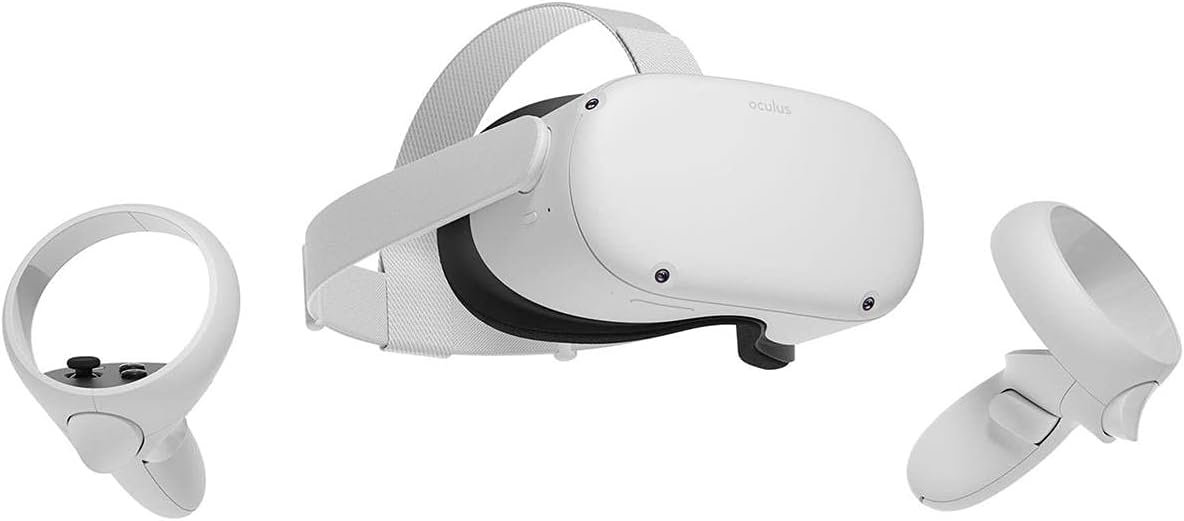
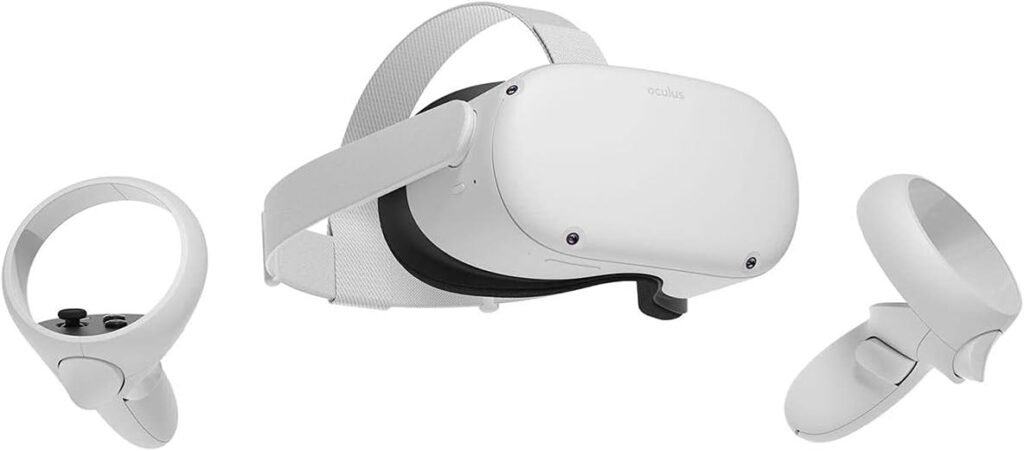
I unboxed the Meta Quest 2 — Advanced All-In-One Virtual Reality Headset — 128 GB and found a compact bundle that aims to be all I need for wireless VR. The package contained the headset, two controllers, a charging cable, a spacer for glasses, and basic documentation, which made initial setup straightforward and quick.
[aiwm-amazon-card title=”Meta Quest 2 — Advanced All-In-One Virtual Reality Headset — 128 GB” image_url=”https://m.media-amazon.com/images/I/417YBZW2yHL._AC_SL1200_.jpg” product_url=”https://www.amazon.com/dp/B099VMT8VZ?tag=stylestati0ac-20″ original_price=”” discounted_price=”274.99″ currency=”USD|$” availability=”Only 11 left in stock – order soon.” disclaimer=”As an Amazon Associate, I earn from qualifying purchases”]
Design and Comfort
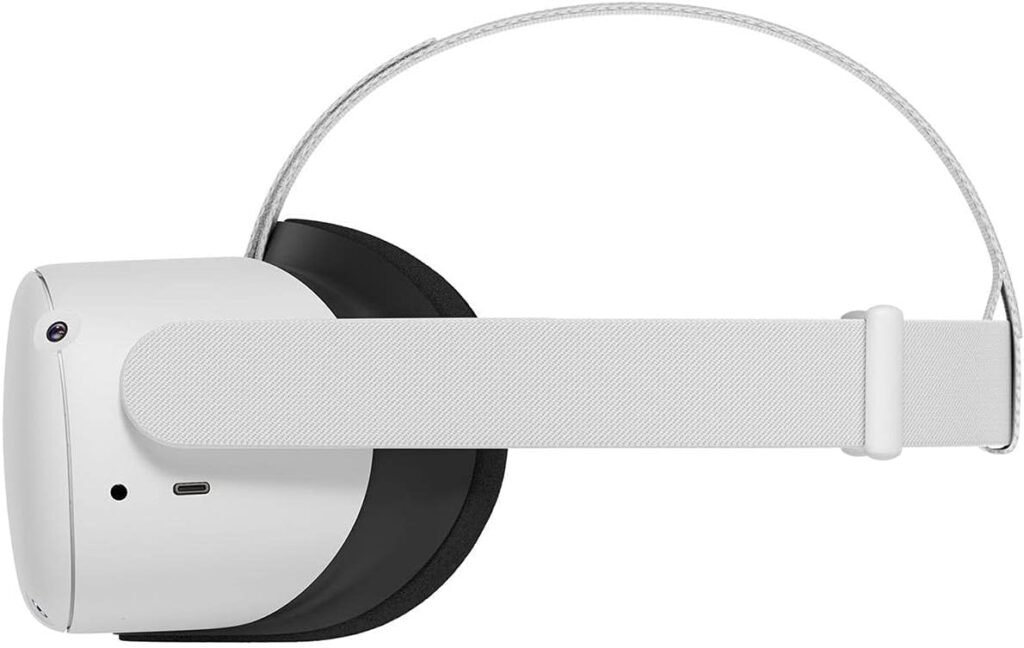
The Quest 2 has a clean, minimalist look that feels modern without being flashy. I liked how light it was on my face during extended sessions, and the soft straps make it comfortable enough to wear for a few hours at a stretch.
Fit and ergonomics
I can adjust the straps to get a snug fit, and the balance across the front and back of my head helps prevent pressure on my nose. Even with glasses, the included spacer and generous interior clearance meant I could play without squishing my frames, which I appreciated.
Build quality and materials
The plastic shell feels sturdy without being heavy, and the soft foam face gasket is comfortable and easy to clean. The headset doesn’t feel premium like some high-end PC VR haptics, but for an all-in-one device it strikes a good balance of durability and lightness.

Display and Visuals
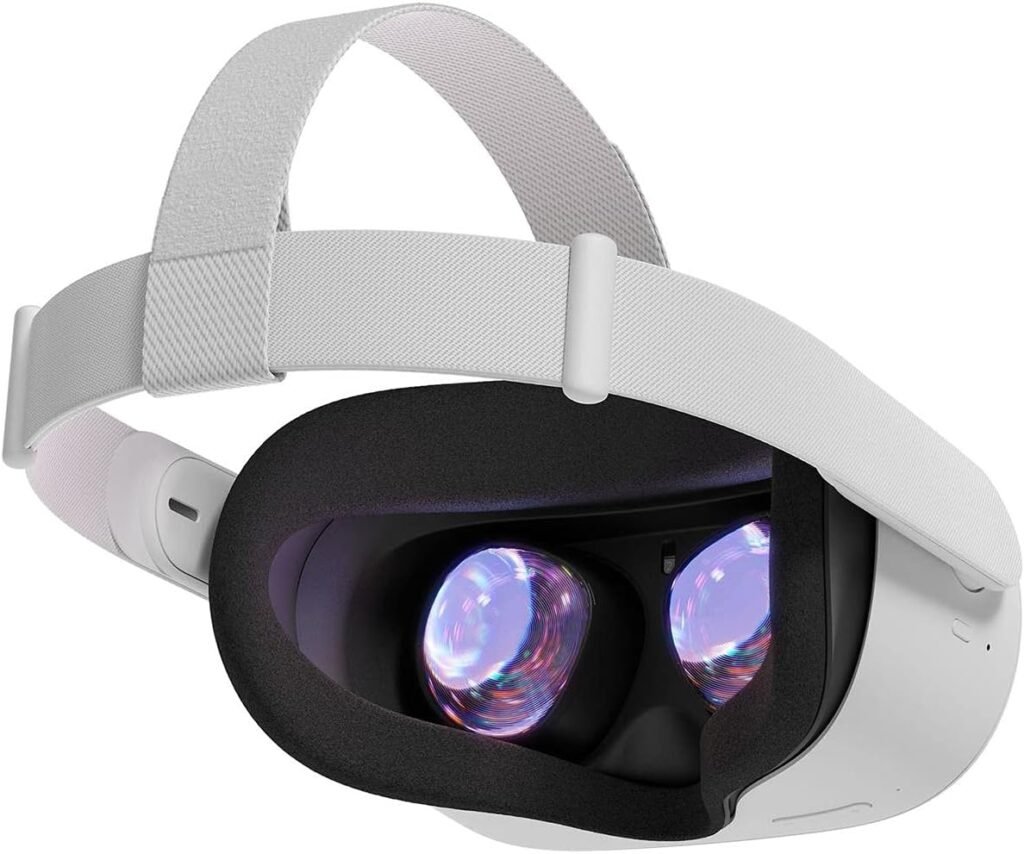
The Quest 2’s display quality surprised me for a standalone headset, delivering sharp images and vibrant colors that made games and media look great. Text was legible in menus and interfaces, which improved usability for longer sessions.
Resolution and refresh rate
With a high-resolution panel and support for refresh rates up to 90Hz (and options to push further in some updates), motion felt smooth during most fast-paced titles. I noticed less motion blur and judder compared to older standalone headsets, and the visual fidelity held up well in both fast action and scenic experiences.
Lenses and FOV
The lenses provide a respectable field of view that keeps me immersed without feeling too narrow, though it’s not as wide as some tethered headsets running on powerful PCs. I did notice slight edge softness at the periphery, but it wasn’t distracting during gameplay and could be mitigated by adjusting the headset position.
Audio and Controls
Built-in speakers deliver 3D positional audio that made directional cues clear and immersive in the many titles I tried. I appreciated the option to plug in headphones if I wanted a more private or bass-heavy experience.
3D positional audio
Spatial audio is effective at placing sound sources around me, which helps a lot in games where hearing an approaching enemy or ambient cues matters. The integrated audio is loud enough for shared spaces and adds immersion without any extra equipment in most scenarios.
Controllers and hand tracking
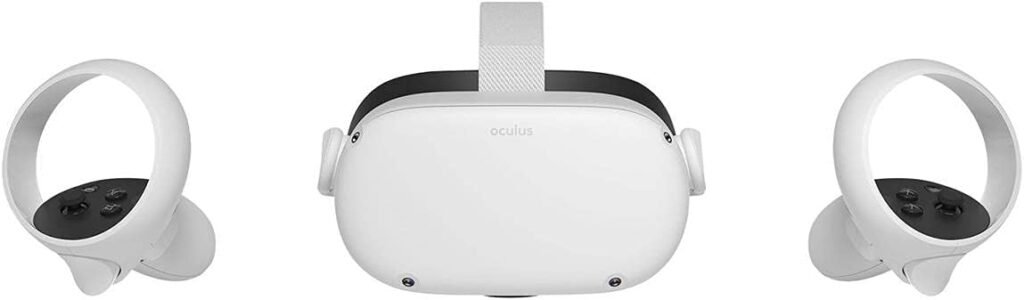
The Quest 2 controllers are ergonomic and reliable, with responsive buttons and thumbsticks that felt familiar if you’ve used other gamepads. Hand tracking is a neat addition for interactions that don’t require controllers, though I still prefer the physical controllers for precision gameplay.
This image is property of Amazon.com.
Performance and Battery
The headset runs on a capable mobile processor that handles most VR titles smoothly, and load times were reasonable for a standalone device. Performance is generally reliable, but very demanding titles may show minor frame drops compared with PC-tethered headsets.
Processor and performance in games
I saw consistently smooth gameplay in a wide range of titles, from rhythm games to action shooters, thanks to effective thermal management and a modern chipset. The trade-off is that extremely high-fidelity experiences that are common on PC VR will either be scaled down or unavailable, but the majority of Quest-native content runs well.
Battery life and charging
Battery life varies with intensity, but I typically got a couple of hours per charge while playing immersive games. Charging via the included USB-C cable is straightforward, and I found it useful to have a portable power bank for extended sessions away from an outlet.
Software and Content Library
The Meta Quest Store offers a growing catalog of more than 500 titles across gaming, fitness, social/multiplayer, and entertainment genres. I appreciated the mix of big-name releases, indie hits, and VR-first experiences that keep adding new content regularly.
Games, apps and experiences
There’s a strong selection of genres, from high-energy rhythm games to narrative-driven adventures and fitness-focused apps that make workouts fun. Some titles are exclusive to the platform, which is great for finding unique experiences that highlight what standalone VR can do.
Social and multiplayer features
Social spaces and multiplayer arenas make it easy to meet friends, attend live events, or team up for co-op missions. I enjoyed jumping into social hubs for casual hangouts and joining multiplayer matches where the headset’s comfort and tracking kept me in the action.
This image is property of Amazon.com.
Setup and Ease of Use
Setting up the Quest 2 was straightforward; the headset walks you through Wi‑Fi, account sign-in, and guardian setup with clear on-screen prompts. I appreciated that no PC or console is required, so the setup process is far less intimidating for first-time VR users.
Initial setup and account requirements
The initial sign-in required a Meta account, which some people may find intrusive but it does enable cross-device features and friend lists. After account setup, the headset guided me through a simple calibration to get perfect clarity and IPD (inter-pupillary distance) adjustments.
Guardian system and play space safety
The guardian system helped me define a safe play area and provided boundary alerts when I got close to the edge, preventing accidental bumps. I relied on this feature for room-scale games, and it gave peace of mind when I was moving around or playing with others nearby.
Portability and Use Cases
Because the Quest 2 is wireless and self-contained, I took it to friends’ houses and on trips with minimal hassle, making it a genuinely portable VR option. Its all-in-one design makes it an ideal choice for people who want VR without the complexity of a PC or external sensors.
Travel and on-the-go use
The compact nature of the headset means I can toss it in a bag and bring it to gatherings, where others can pick it up and play quickly. Battery life and the need to recharge are considerations, but a power bank and a slim carrying case make short-term travel easy and convenient.
Fitness and mixed-use scenarios
For workouts, the headset tracks my movements well enough to turn exercise into a game-like session, and several fitness titles keep me engaged longer than traditional routines. The combination of movement detection and social features lets me join group workouts, making staying active more fun and consistent.
This image is property of Amazon.com.
Children and Parental Guidance
Meta recommends accounts for ages 10 and up, and the headset includes safety guidance for parents, which I think is important for households with kids. I believe parental supervision and account controls are essential when younger players use the device, especially given that some content is meant for mature audiences.
Age recommendations and account management
Creating supervised accounts and using parental restrictions lets me control what content younger users can access, which gives me confidence when family members want to try titles. I made sure to check online child safety guidance and to set up the appropriate filters and time limits for minors.
Safety tips and content restrictions
For safety, I recommend clearing a play area, using the guardian system, and taking regular breaks to avoid eyestrain or motion discomfort. Additionally, checking age ratings and user reviews before installing apps helps prevent exposure to content that isn’t age-appropriate.
Pros and Cons
I found a number of strengths and a few compromises that are worth weighing before buying. The portable, wireless nature and large content library are major positives, while battery life and graphical limits compared with PC VR are trade-offs to consider.
- Pros: Wireless freedom, comfortable fit, large content library, strong social features, integrated audio.
- Cons: Limited battery life, not as powerful as PC VR, peripheral edge softness in visuals, reliance on a Meta account.
This image is property of Amazon.com.
Product specifications (quick breakdown)
Below is a table summarizing the most important specs I used to compare the headset quickly. I found this layout useful when deciding what mattered most to me.
| Specification | Detail |
|---|---|
| Product name | Meta Quest 2 — Advanced All-In-One Virtual Reality Headset — 128 GB |
| Display | High-resolution LCD panels, up to 90Hz (software-dependent refresh rates) |
| Audio | Built-in 3D positional audio, 3.5mm headphone jack option |
| Controllers | Two wireless Oculus Touch controllers with haptic feedback |
| Storage | 128 GB internal storage |
| Tracking | Inside-out tracking (no external sensors) |
| Connectivity | Wi‑Fi, USB-C charging, optional PC link via cable or Air Link |
| Battery life | Typically 2–3 hours depending on usage |
| Recommended age | Accounts for 10+ (parental controls recommended for children) |
My real-world experiences
I spent many hours testing different kinds of content to see how the headset performed in practical use. From gaming sessions to movie nights and social hangouts, the Quest 2 handled most scenarios with ease and felt like a versatile entertainment device.
Gaming sessions
Fast-paced shooters and rhythm games tested the headset’s responsiveness, and I was impressed by how accurately the controllers tracked my movements. I also enjoyed slower-paced puzzle and narrative games where visuals and comfort mattered more than raw performance.
Watching movies and media
For movies and streaming content, the display produced vivid colors and comfortable viewing that made long sessions pleasant. The built-in speakers provided clear dialogue and immersive ambience, while the headphone option improved bass and privacy when needed.
Comfort during long sessions
On longer play sessions, the weight remained manageable and pressure points were minimal, especially after I fine-tuned the straps. I found that swapping the facial interface for a thicker foam or a third-party accessory helped reduce facial fatigue during marathon sessions.
Managing motion and eye strain
I learned to take short breaks every 30–45 minutes to prevent discomfort and reduce the chance of motion sickness, which is a personal sensitivity for some users. Adjusting the IPD and ensuring the headset sits correctly on my face significantly reduced eye strain and improved clarity.
Connectivity options and PC Link
The Quest 2 supports wireless PC streaming via Air Link and wired connections with a USB-C cable for playing PC VR titles. I tested both modes and found wired connections offered slightly lower latency and higher visual fidelity, while Air Link provided great convenience for casual PC VR sessions.
Air Link vs wired tether
Air Link is fantastic for quick sessions where I don’t want to be tethered, and the convenience is hard to beat if I have a strong network. A high-quality USB-C cable remains the best option when I need the absolute lowest latency and best visuals for demanding PC VR games.
Upgrades and accessories
There are plenty of official and third-party accessories that can enhance comfort, battery life, and performance. I tried a few accessories that made a noticeable difference in daily use, such as counterweight straps, facial interface replacements, and external battery packs.
Must-have accessories I used
I recommend a better strap for longer sessions, a thicker facial foam for comfort, and a portable charger for extended play, all of which made my experience more enjoyable. A reliable USB-C cable or official link cable is worthwhile if you plan to connect to a PC regularly.
Maintenance and care
Keeping the headset clean and storing it safely are straightforward tasks that prolong its lifespan and hygiene. I cleaned the foam face gasket after sweaty sessions and kept the headset in a padded case when not in use to prevent dust and damage.
Updating firmware and app management
The headset will prompt for firmware updates periodically, which often include performance and feature improvements. I made sure to install updates promptly, which resolved bugs and unlocked features like improved refresh rates or Air Link enhancements.
Privacy and account considerations
The requirement for a Meta account gives access to social features and cloud saves, but some users may want to weigh the trade-offs related to data and account integration. I took time to review privacy settings and restricted certain permissions to match my comfort level.
Account linking and multiplayer
Linking my account across devices streamlined friend lists and multiplayer invites, which made connecting with others simple and convenient. I did, however, disable unused sharing options and managed app permissions to limit unnecessary data collection.
Troubleshooting common issues
I ran into a few minor quirks during long-term use, such as occasional tracking hiccups in low light or the need to fine-tune guardian boundaries. Most issues were easy to fix by recalibrating the headset, updating firmware, or improving room lighting.
Fixes that helped me
Re-centering tracking, restarting the headset after an update, and keeping controllers charged solved the majority of problems I experienced. For persistent problems, the Meta support site and community forums provided helpful troubleshooting steps and confirmation that I wasn’t alone.
Tips and Tricks
I’ve gathered some practical tips that made my experience with the Quest 2 more enjoyable and efficient. These small adjustments helped me get the most out of the headset without needing technical expertise.
- Adjust the IPD for clarity and comfort; small changes make a big difference.
- Use the guardian system to define a safe play area and reduce the risk of accidents.
- Keep a power bank handy for sessions away from a power outlet.
- Try both the built-in speakers and headphones to find the best audio experience for your setting.
- Clean the foam and lenses regularly to maintain hygiene and optimal visuals.
Final Verdict
I found the Meta Quest 2 — Advanced All-In-One Virtual Reality Headset — 128 GB to be a compelling balance of performance, comfort, and convenience for standalone VR. It’s an excellent option for newcomers and seasoned players who want a wireless, easy-to-use headset with a large and growing content library and strong social features.
Who I think it’s best for
This headset is ideal for casual gamers, fitness enthusiasts, and people who want a shared, social VR experience without the complexity of PC-based systems. If you prioritize portability and simplicity over the absolute top-tier graphical fidelity of tethered setups, it’s a strong choice.
Final considerations before buying
Before buying, consider whether you need PC-tethered performance or longer battery life, as those are the main trade-offs with an all-in-one headset. If you want a capable, accessible VR system that works out of the box and keeps getting better with software updates and new content, I think the Meta Quest 2 is worth serious consideration.

Disclosure: As an Amazon Associate, I earn from qualifying purchases.