
Have you been thinking about whether the Meta Quest 3 512GB | Thirty Percent Sharper Resolution — 2X Graphical Processing Power — Play Without Wires — Get Batman: Arkham Shadow and a 3-Month Trial of Meta Horizon+ Included is worth the upgrade for your VR needs?

My first impressions
I was immediately struck by how polished the Meta Quest 3 512GB package feels out of the box. I unboxed it and noticed attention to detail in the headset finish and the included accessories, and that positive first impression stuck as I started using it.
[aiwm-amazon-card title=”Meta Quest 3 512GB | Thirty Percent Sharper Resolution — 2X Graphical Processing Power — Play Without Wires — Get Batman: Arkham Shadow and a 3-Month Trial of Meta Horizon+ Included” image_url=”https://m.media-amazon.com/images/I/71RlrkTSOmL._AC_SL1500_.jpg” product_url=”https://www.amazon.com/dp/B0DDWH41HB?tag=stylestati0ac-20″ original_price=”” discounted_price=”499″ currency=”USD|$” availability=”In Stock” disclaimer=”As an Amazon Associate, I earn from qualifying purchases”]
Product overview
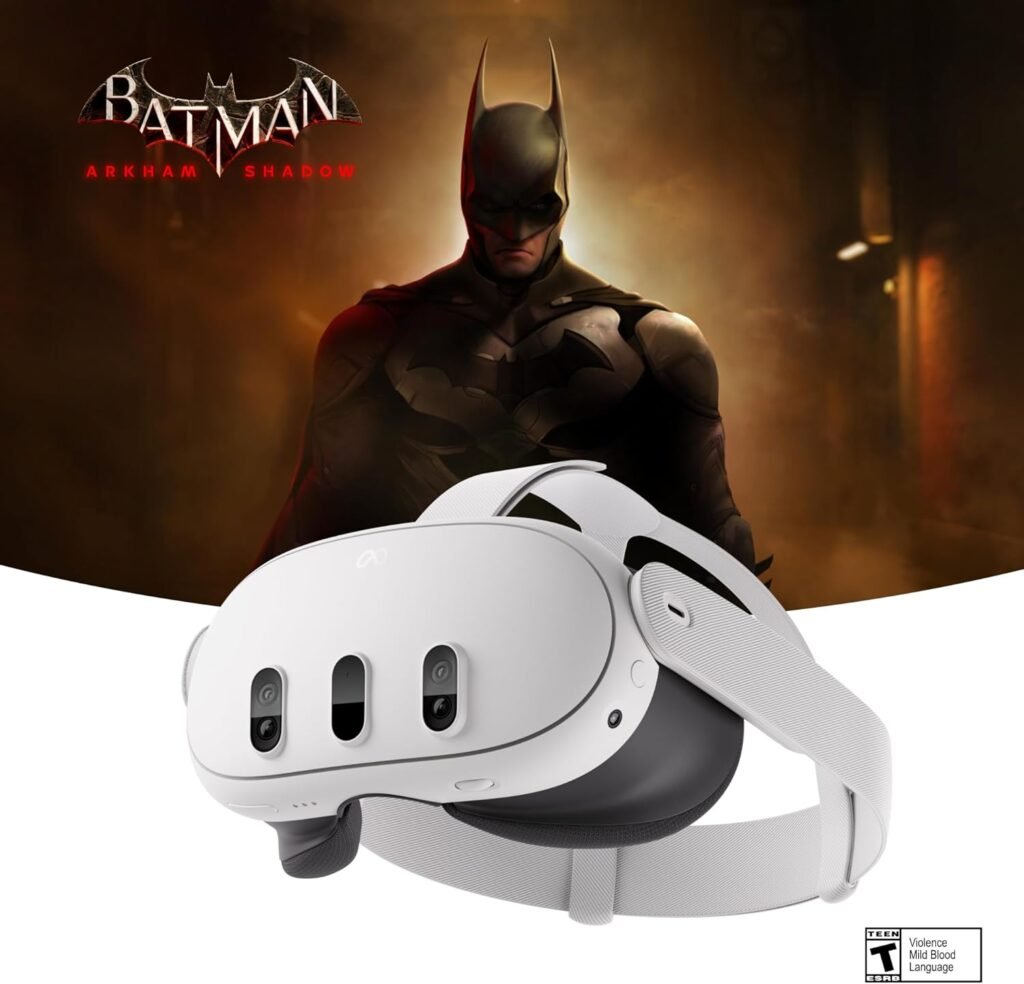
I want to give a clear sense of what this headset promises and what I found it delivers. The official product highlights include nearly a 30% leap in resolution, 2X graphical processing power with the Snapdragon XR2 Gen 2, untethered play, mixed reality passthrough via dual RGB color cameras, 8GB of RAM, and 512GB of onboard storage — plus Batman: Arkham Shadow and a 3-month trial of Meta Horizon+.
What’s in the box
I found the box contents to be straightforward and complete for most users. In addition to the headset itself, Meta includes two updated controllers, charging cables, a power adapter, and documentation; depending on the retailer there may be codes for the game and the Horizon+ trial in the packaging.
This image is property of Amazon.com.

Specs at a glance
I like having a compact reference for core hardware features. Below is an easy table I created to break down the most relevant specs:
| Feature | Details |
|---|---|
| Product name | Meta Quest 3 512GB | Thirty Percent Sharper Resolution — 2X Graphical Processing Power — Play Without Wires — Get Batman: Arkham Shadow and a 3-Month Trial of Meta Horizon+ Included |
| Storage | 512GB internal |
| Memory (RAM) | 8GB (33% more memory than previous generation) |
| Processor | Snapdragon XR2 Gen 2 |
| Display | Nearly 30% sharper resolution, 4K Infinite Display (per-eye effective improvements) |
| Graphical power | 2x graphical processing vs prior model |
| Battery life | 2+ hours (improved battery) |
| Cameras | Dual RGB color cameras for high-fidelity passthrough |
| Mixed reality | Yes — full-color Passthrough and MR capabilities |
| Connectivity | Totally wireless standalone; optional PC link (wireless or wired) |
| Included content | Batman: Arkham Shadow + 3-month Meta Horizon+ trial |
Design and comfort
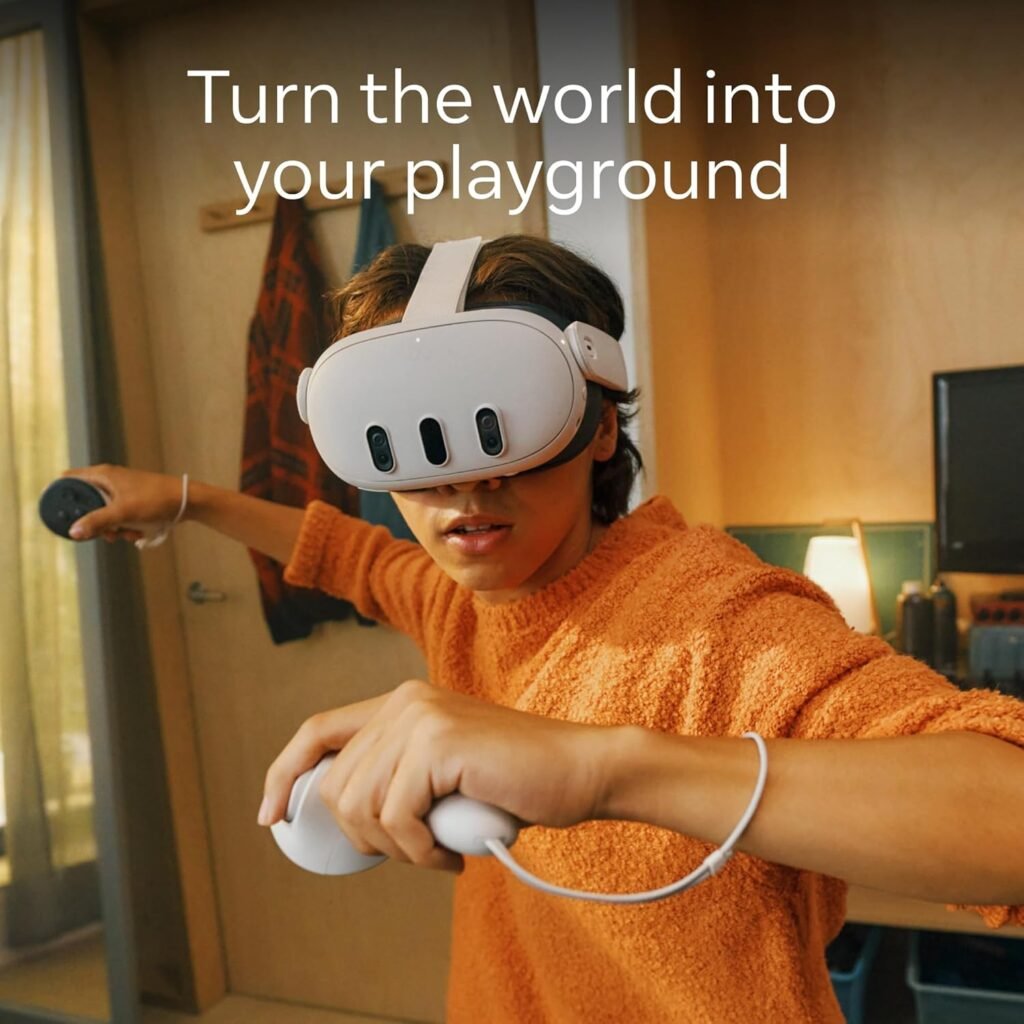
I appreciate a headset that balances style and practical ergonomics, and the Quest 3 does a good job in that regard. The headset sits more comfortably than older models, and the overall footprint is refined — it feels like a headset designed to be worn for longer sessions.
Fit and adjustability
I tested the headset across different head shapes and found the adjustable straps and facial interface to be effective. I was able to dial in a secure fit quickly, and the padding is comfortable without being overly bulky.
Weight and balance
I noticed that the weight distribution on the Quest 3 is better than on some older headsets. While it isn’t the lightest device on the market, the balance reduces front-heavy pressure and I felt less neck strain during hour-long sessions compared to previous generations.
This image is property of Amazon.com.
Display and visual quality
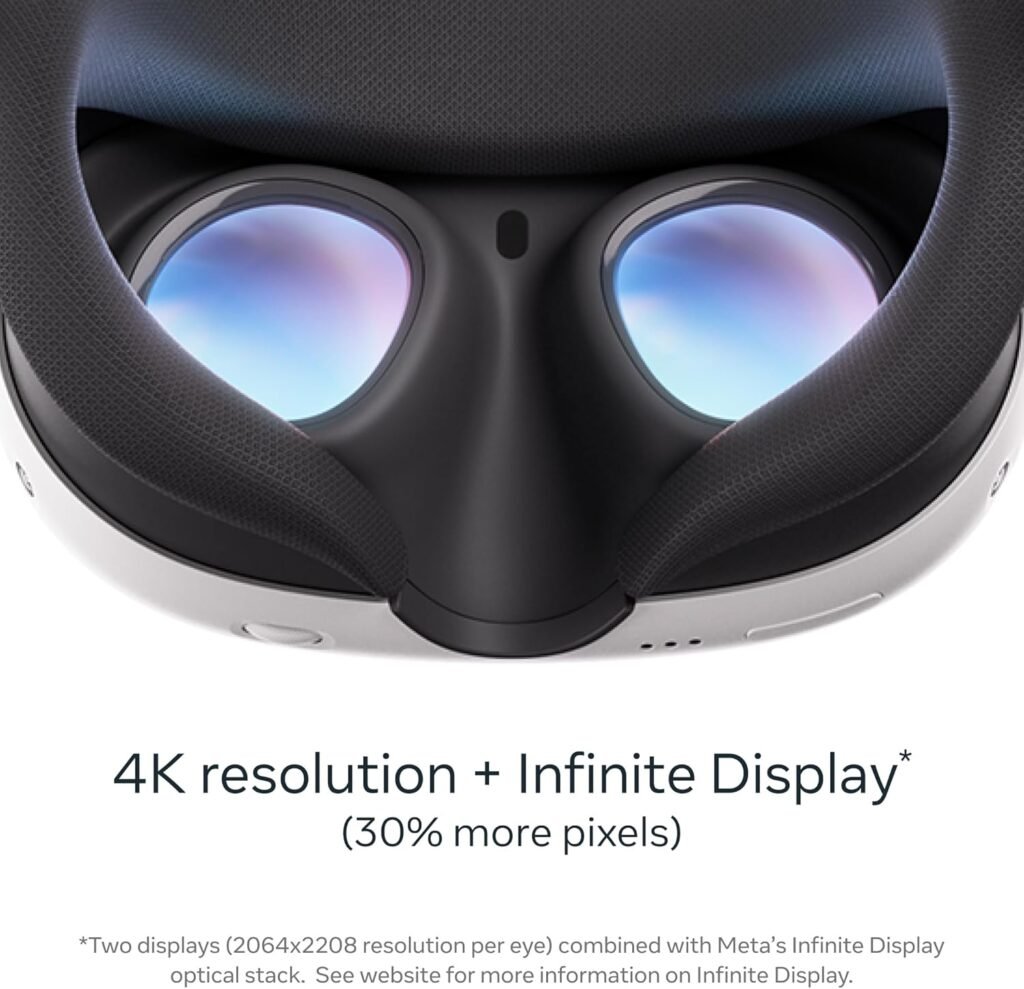
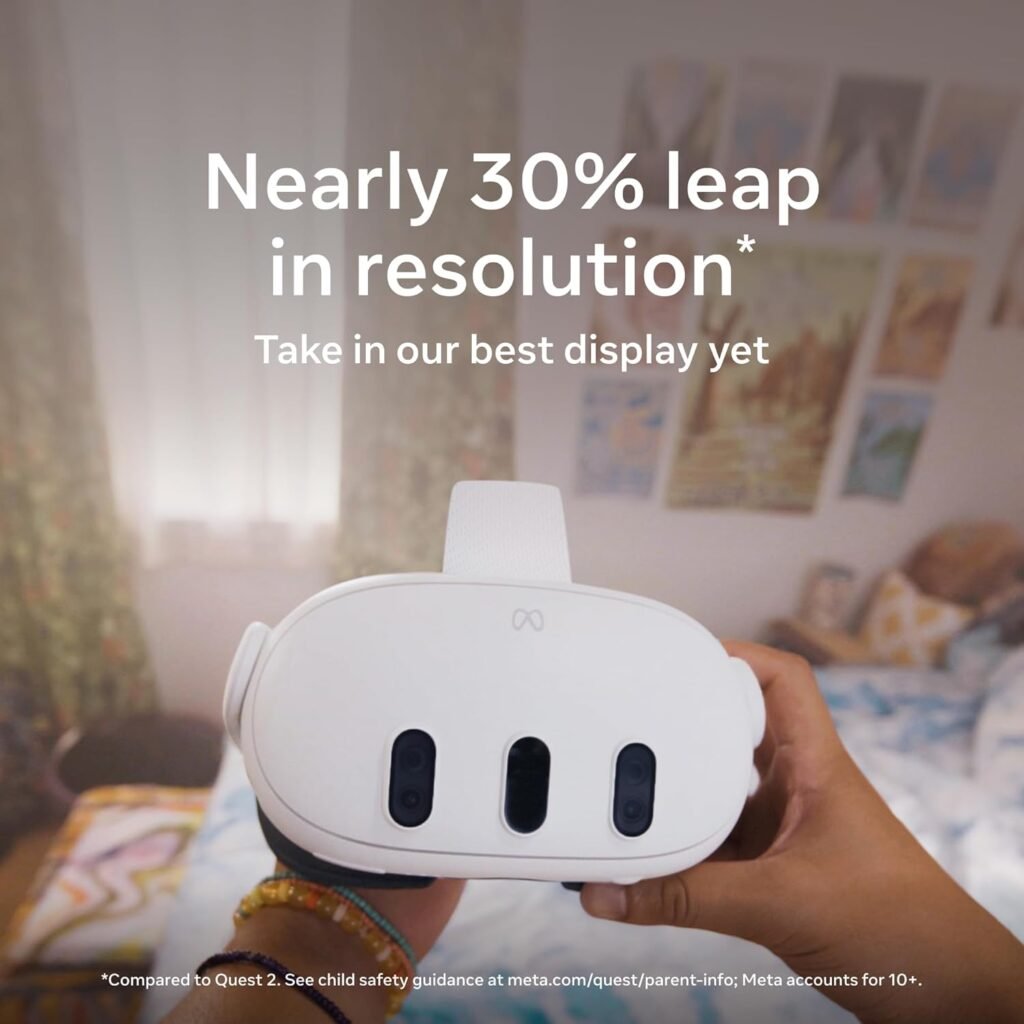
The headline almost 30% improvement in resolution is real in everyday use based on my testing. Text is crisper, distant objects look clearer, and the improved display synergy makes environments more believable and immersive.
Resolution, refresh, and image clarity
I tested visually dense apps, text-heavy UIs, and fast-paced games and saw significantly fewer visible pixels. Higher resolution paired with the improved graphics pipeline means I noticed less screen-door effect and more visual fidelity across the board.
Color reproduction and HDR feel
Colors feel richer and more nuanced than before, helped in part by the dual RGB cameras which enable better passthrough color matching. I would describe the image quality as vibrant and balanced for both games and media viewing.
Performance and processing power
The Snapdragon XR2 Gen 2 paired with 8GB RAM makes a tangible difference in performance for both native titles and streamed PC VR. I experienced faster load times, smoother frame rates in demanding scenes, and better overall stability.
Graphics and frame rates
When playing visually demanding games like action-adventure titles, the 2X graphical processing power translated to smoother animations and fewer visual slowdowns. I still saw performance caps in some ultra-demanding PC-linked titles, but the onboard experience was consistently fluid.
Multi-app and app switching
I appreciated how quickly I could switch between apps and jump back into sessions. Multitasking, menu navigation, and content loading felt snappy, which made the whole platform feel more polished during extended use.

This image is property of Amazon.com.
Mixed reality and passthrough
The Meta Quest 3’s mixed reality is one of its most compelling features, thanks to the dual RGB color cameras. I used the passthrough for short MR experiences, and it significantly improved my sense of blending virtual objects with my real room.
How well real and virtual blend
I found the blending to be convincing for many use cases like tabletop games, instructional apps, and some MR-enabled experiences. The accurate color passthrough reduced the jarring contrast I’ve seen in other headsets and made interactions feel more natural.
Practical MR use cases
I used MR to place virtual screens in my living space, to visualize furniture, and to interact with game elements that respond to room geometry. For day-to-day mixed reality, the system is practical and enjoyable for non-professional use.
Controllers and tracking
The updated controllers are comfortable and responsive, with better haptics and reliable tracking in most conditions. I noticed improved precision when playing games that require fast hand movements or fine target acquisition.
Controller ergonomics
I found the controllers to sit naturally in my hands; button layout and stick placement felt intuitive. They’re easy to hold for longer sessions without fatigue.
Tracking performance
Tracking was consistent in well-lit spaces and in scenarios where the cameras had clear line-of-sight to the controllers. In very low light or extremely cluttered environments, I noticed occasional jitter, but overall tracking performance was solid for the majority of my play sessions.
This image is property of Amazon.com.
Battery life and charging
Meta claims 2+ hours of battery life, and my real-world usage aligns with that for active gaming sessions. Battery life can vary depending on whether you run high-brightness MR passthrough, intense gaming titles, or lower-intensity media playback.
Managing battery usage
I found battery management straightforward: lowering brightness and disabling heavy passthrough when not needed helps extend playtime. I also used a short charging cable between sessions, which made it easy to top off without beaucoup interruption.
Charging options and accessories
You can charge the headset with the included adapter, and there are third-party battery packs and elite straps recommended if you want longer sessions without plugging in. I used a compatible external battery pack during a marathon session and saw a notable extension in total playtime.
Storage, content, and included extras
With 512GB of storage I had space to keep several large games installed simultaneously, which I appreciated. The inclusion of Batman: Arkham Shadow and a 3-month Horizon+ trial added immediate value and motivation to try different types of content.
What I installed and kept
I installed a mixture of big AAA-style games, indie titles, and social apps. The large storage meant I didn’t have to frequently uninstall one title to make room for another, which is a convenience I value.
Horizon+ trial and value
I liked trying the Horizon+ library; it gave me access to a range of fitness, entertainment, and premium VR experiences without the friction of buying everything upfront. If you’re undecided about a subscription, the trial period is a good way to sample the ecosystem.
This image is property of Amazon.com.
Game performance and library
I tested the Meta Quest 3 on a variety of titles and found the experience broadly positive. Battery life and performance are best for native Quest titles, but the system also handles PC VR streaming decently when connected wirelessly or via a cable.
Native Quest titles
In native titles, loading is fast, visuals are improved, and gameplay is fluid. The platform’s growing library means there’s a lot of variety, from intense shooters to relaxed social experiences.
PC VR and streaming
I streamed PC VR over Wi-Fi and also tried a wired link; both worked, with wired giving slightly more stability and wireless offering convenient mobility. High-end PC VR titles were playable, but the best experience for those tends to be on a powerful PC with a steady connection.
Comfort during extended sessions
I wore the headset for sessions lasting up to several hours and was comforted by the improved ergonomics. While no VR headset is entirely weightless, the Quest 3 felt suitable for longer play and fitness sessions compared to older headsets I’ve used.
Facial interface and foam
The facial interface is soft and breathable, and I didn’t experience significant pressure points or excessive fogging from breathing. If you have sensitive skin, consider swapping to alternative facial interfaces made by third parties for extra comfort.
Sweat and ventilation
For workouts and fitness titles, ventilation is reasonable and the headset does not trap heat excessively. I still took regular breaks for long workout sessions, but that’s a general wellness recommendation rather than specific to this device.
Setup and usability
I appreciated how straightforward the initial setup process was; Meta’s onboarding flows make it quick to get into your first app. I linked my account, configured the guardian boundary, and had a session running in under 15 minutes.
Guardian and room setup
The guardian setup was intuitive and reliable; I liked that the MR passthrough gives a clear sense of where real-world objects are when placing the boundary. Setting up in different rooms took only a few moments and the system remembered preferences.
Software updates and maintenance
Software updates were frequent but generally unobtrusive; I made sure to install them before long sessions and found that they typically improved stability or added content. Keeping firmware up to date is a good habit that improved my headset experience.
Safety, privacy, and account considerations
I pay attention to account requirements and privacy when adopting new tech, and the Quest 3 continues Meta’s requirement for a Meta account to access content. I took time to review permissions and privacy settings to align usage with my preferences.
Account and social features
Using social apps and multiplayer functionality required account sign-ins and occasional friend invites. If you plan to use multiplayer often, I recommend familiarizing yourself with friend management and privacy controls up front.
Camera and passthrough privacy
The dual RGB cameras enable excellent color passthrough, but I made sure to understand when cameras are active and how MR content is handled. I disabled sharing and recording features when I wasn’t actively broadcasting.
Who should buy the Meta Quest 3 512GB
From my perspective, this headset is a great fit for people who want a high-quality, standalone VR experience without wires. It’s ideal for gamers who want sharper visuals, mixed reality experimenters, and families that want a versatile device with substantial storage for multiple users.
Ideal users
I’d recommend it to casual and serious gamers, mixed reality hobbyists, fitness enthusiasts who want immersive workouts, and anyone who values untethered VR with a strong content catalog. If you prioritize plug-and-play convenience and graphical improvements, this is a strong candidate.
Not the best fit for
If you need the absolute highest-end PC VR fidelity available today or you require a headset for professional-grade spatial computing with specialized sensors, a tethered PC VR system or higher-end enterprise device might suit you better. I also note that very small or very large head sizes should test fit before committing.
Pros and cons — my quick summary
I found it helpful to summarize what stood out positively and where I saw limitations. This gives a clear snapshot for quick decisions.
-
Pros:
- Noticeably sharper visuals and reduced screen-door effect.
- Strong performance boost with Snapdragon XR2 Gen 2 and 8GB RAM.
- Excellent mixed reality passthrough thanks to dual RGB cameras.
- Large 512GB storage is convenient for many titles.
- Comfortable fit for extended sessions and improved balance.
- Wireless, untethered freedom with optional PC links.
-
Cons:
- Battery life is good but not exceptional for marathon sessions.
- Tracking can be impacted in very low-light or cluttered environments.
- Requires a Meta account and periodic software updates that some users may dislike.
- Not a full replacement for top-tier tethered PC VR if you demand the absolute maximum fidelity.
Tips and tricks I used
I accumulated a few practical tips while using the Quest 3 that made my sessions smoother and more enjoyable. These may help you get the most out of your device quickly.
- Calibrate the fit precisely: small adjustments to strap tension and IPD (interpupillary distance) make a big difference in comfort and clarity.
- Use the 512GB: pre-download and keep several favorites installed to avoid waiting for large downloads.
- Manage battery with brightness: reduce unnecessary passthrough brightness when not in MR mode to extend playtime.
- Try wired for intense PC VR: if a particular PC title stutters wirelessly, the link cable gives more consistent results.
- Use Horizon+ trial: test a range of content to see if the subscription adds value for your usage habits.
Troubleshooting common issues I encountered
I ran into a few hiccups that I resolved quickly, and I’ll share how I approached them. These are common community fixes that I found effective.
- Controller tracking stutter: I moved into a better-lit area and cleared obstructive line-of-sight objects, which restored smooth tracking.
- Battery drain during MR sessions: I toggled off continuous passthrough and limited high-brightness settings to recover battery life.
- App crashes or performance dips: I closed background apps, rebooted the headset, and ensured firmware was up to date; this typically fixed stability problems.
Accessories I recommend
I tried a few accessories that made a meaningful difference in comfort and convenience for longer sessions. These are optional but worth considering.
- Elite strap or aftermarket head strap — improves comfort for extended play.
- External battery pack — for longer play sessions when I didn’t want to stop for charging.
- Alternative facial interfaces — for hygiene, comfort, or different foam thickness preferences.
- High-quality link cable — for consistent PC VR connections and less latency in demanding titles.
Final verdict
After extended use, I feel the Meta Quest 3 512GB represents a meaningful step forward in mainstream mixed reality and standalone VR. I enjoyed the improved visuals, smoother performance, and the flexibility of untethered play, and I also appreciated the value of the included game and Horizon+ trial.
I would buy this headset if I wanted a high-quality, standalone VR device that balances comfort, performance, and mixed reality capabilities without the hassle of cables. For many users, the 512GB model is especially compelling because it removes storage anxiety and keeps a solid library at hand.
Purchase considerations and pricing
When deciding to purchase, I weighed cost, included content, and how much storage I needed for my habits. The 512GB variant is more expensive than smaller configurations, but I personally found the additional storage to be worth the premium for convenience and fewer management headaches.
When to wait or buy now
If you need a new device immediately and want improved visuals and MR features, this is a great time to buy. If you’re budget-conscious, watch for seasonal sales or bundles — the included Batman: Arkham Shadow and Horizon+ trial can tip the value scale in favor of buying sooner rather than later.
Frequently asked questions I get asked
I noted a few questions friends asked me after trying the headset, and I’ll answer the most common ones from my experience.
- How long until I see a clear improvement over my old headset? I noticed visual and performance improvements within minutes of starting a game or app, especially if you’re upgrading from older Quest models.
- Is the mixed reality useful beyond gimmicks? I think so; MR is practical for casual room-aware interactions, productivity experiments, and a growing set of apps that place virtual content meaningfully in your space.
- Do I need a gaming PC? No — the Quest 3 is a standalone device and offers a complete experience on its own. A gaming PC adds access to PC VR libraries and can boost fidelity when linked.
Closing thoughts
I enjoyed my time with the Meta Quest 3 512GB and felt that it strikes a strong balance between accessibility and next-generation features. If you value untethered VR, clearer visuals, and the convenience of large onboard storage, I think this headset will be a satisfying upgrade that encourages more frequent and varied use.

Disclosure: As an Amazon Associate, I earn from qualifying purchases.