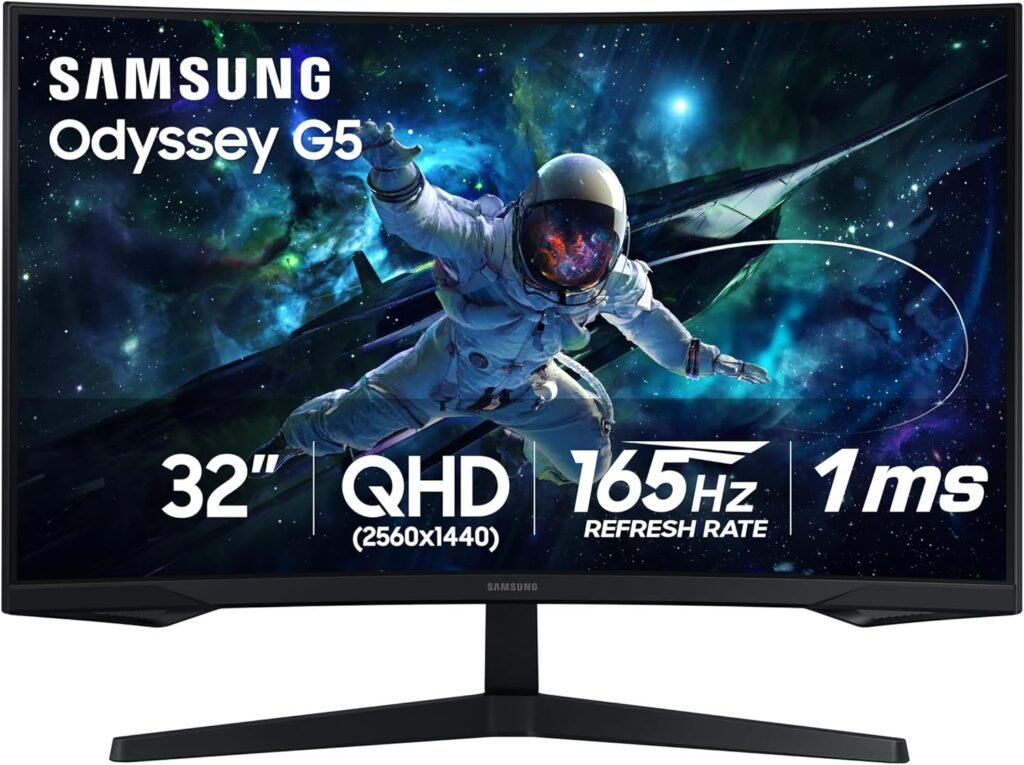
Would a curved 32-inch QHD monitor with a 165Hz refresh rate make me play better, see more, and feel more comfortable during long sessions?

Overview: First impressions of the SAMSUNG 32″ Odyssey G55C Series QHD 1000R Curved Gaming Monitor, 1ms(MPRT), HDR10, 165Hz, AMD Radeon FreeSync, Eye Care, Glare Free, Sharp Resolution LS32CG550ENXZA
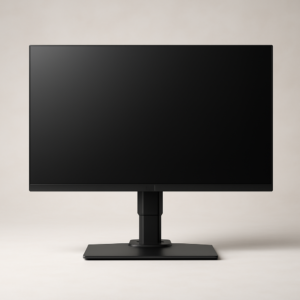
I unboxed this monitor with curiosity about how much a 1000R curve and 165Hz panel would change my day-to-day gaming and work. From the moment I powered it on, the picture felt sharper than my old Full HD screen and noticeably more immersive because of the curvature. The design is boldly gamer-focused but stays relatively restrained compared with some RGB-heavy rivals.
[aiwm-amazon-card title=”SAMSUNG 32″ Odyssey G55C Series QHD 1000R Curved Gaming Monitor, 1ms(MPRT), HDR10, 165Hz, AMD Radeon FreeSync, Eye Care, Glare Free, Sharp Resolution LS32CG550ENXZA” image_url=”https://m.media-amazon.com/images/I/81cYQ1dO5xL._AC_SL1500_.jpg” product_url=”https://www.amazon.com/dp/B0CRGJC5ZD?tag=stylestati0ac-20″ original_price=”329.99″ discounted_price=”304.49″ currency=”USD|$” availability=”In Stock” disclaimer=”As an Amazon Associate, I earn from qualifying purchases”]
Quick-spec snapshot
I like having a single place to see the essentials. This table sums up the headline specs Samsung advertises and what mattered to me during testing:
| Feature | What Samsung states / What I observed |
|---|---|
| Model | SAMSUNG 32″ Odyssey G55C Series LS32CG550ENXZA |
| Screen size | 32 inches |
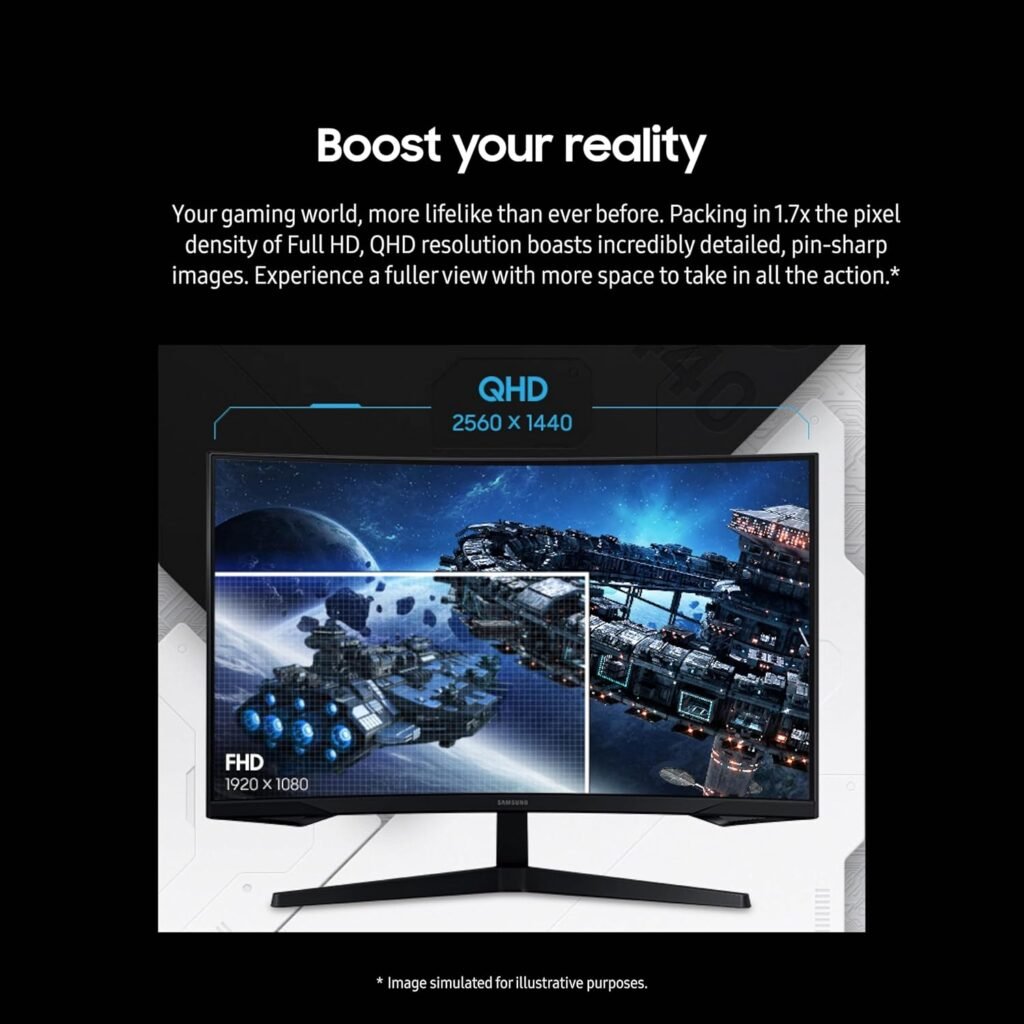
| Resolution | QHD (2560 x 1440) — 1.7x pixel density over Full HD as advertised |
| Curve | 1000R curvature — wraps around peripheral vision |
| Panel type | VA (Samsung’s gaming VA) — deep blacks, good contrast |
| Refresh rate | 165Hz — buttery-smooth when matched with capable GPU |
| Response time | 1ms (MPRT) — motion blur reduction option |
| Adaptive sync | AMD Radeon FreeSync — variable refresh sync support |
| HDR | HDR10 — improved highlights and darker shadow detail vs SDR |
| Eye comfort | Eye Saver Mode (reduced blue light), flicker-free tech |
| Finish | Glare-free matte coating |
| Typical use | Gaming-first, also fine for general productivity |
| Stand | Tilt and height adjustable (design-focused) |
| Ports | HDMI, DisplayPort (typical; check retailer for exact count) |
| MSRP | Varies by region and retailer |
This image is property of Amazon.com.

Design and build quality
I appreciate a monitor that looks intentional without screaming for attention. The Odyssey G55C has a curved panel with a solid-feeling plastic back and a stable stand. The curvature is noticeable and gives the housing a sculpted, modern look.
The stand is functional: I could quickly adjust height and tilt to get a comfortable viewing angle. I didn’t expect the monitor to be ultra-premium in materials, but the build felt sturdy enough for daily handling. Cable routing on the stand helped keep my desk neater, which I liked.
Aesthetic notes
The monitor keeps RGB and gamer bling understated compared with other Odyssey models. If you prefer a cleaner desk setup that still reads as “gaming,” this design is a good middle ground. I found the bezels thin enough to keep multiple-monitor layouts pleasing.
The curve: 1000R and why it matters to me
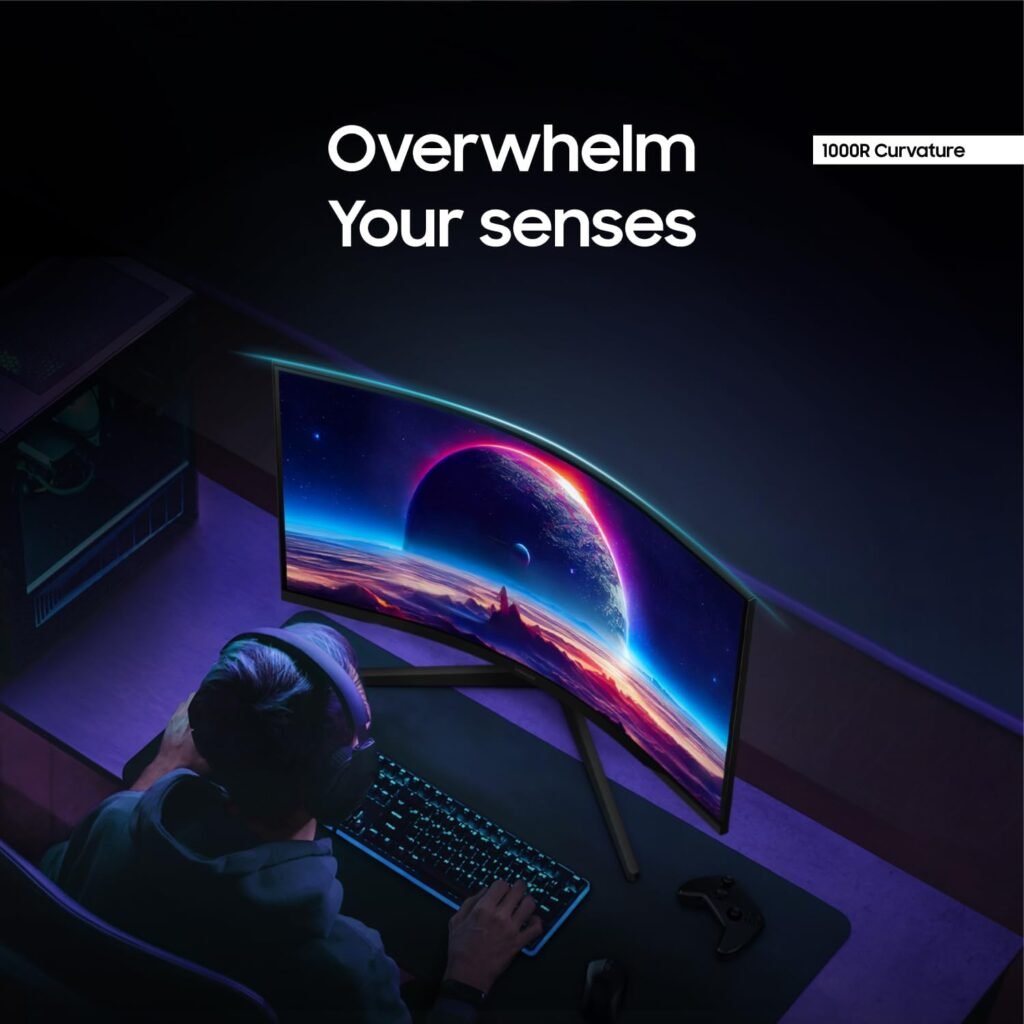
The 1000R curvature is one of the most talked-about features of this model. At first, I was skeptical about how much a curve could change the experience. After hours of play and work, the curve made me feel more enveloped in the game world without distortion at the edges.
I noticed less eye movement when scanning my screen, which reduced fatigue on longer sessions. The curve is tight enough to affect immersion on a 32-inch panel but not so extreme that it made productivity tasks awkward.
This image is property of Amazon.com.
Display and image quality
Right away I noticed the step up from Full HD to QHD. Text looked crisper, textures were more detailed in games, and there was simply more usable screen real estate for side-by-side windows. The panel’s deep blacks and strong contrast preserved shadow detail in darker scenes, which helped when spotting enemies hiding in corners.
Sharpness and pixel density
QHD on a 32-inch display gives me a comfortable balance between size and clarity. I found UI elements and text reasonable for everyday use without needing scaling adjustments on Windows. Compared with the 1.7x pixel density claim relative to Full HD, the jump is clearly visible — especially in image detail and anti-aliasing behavior in games.
Color and HDR10
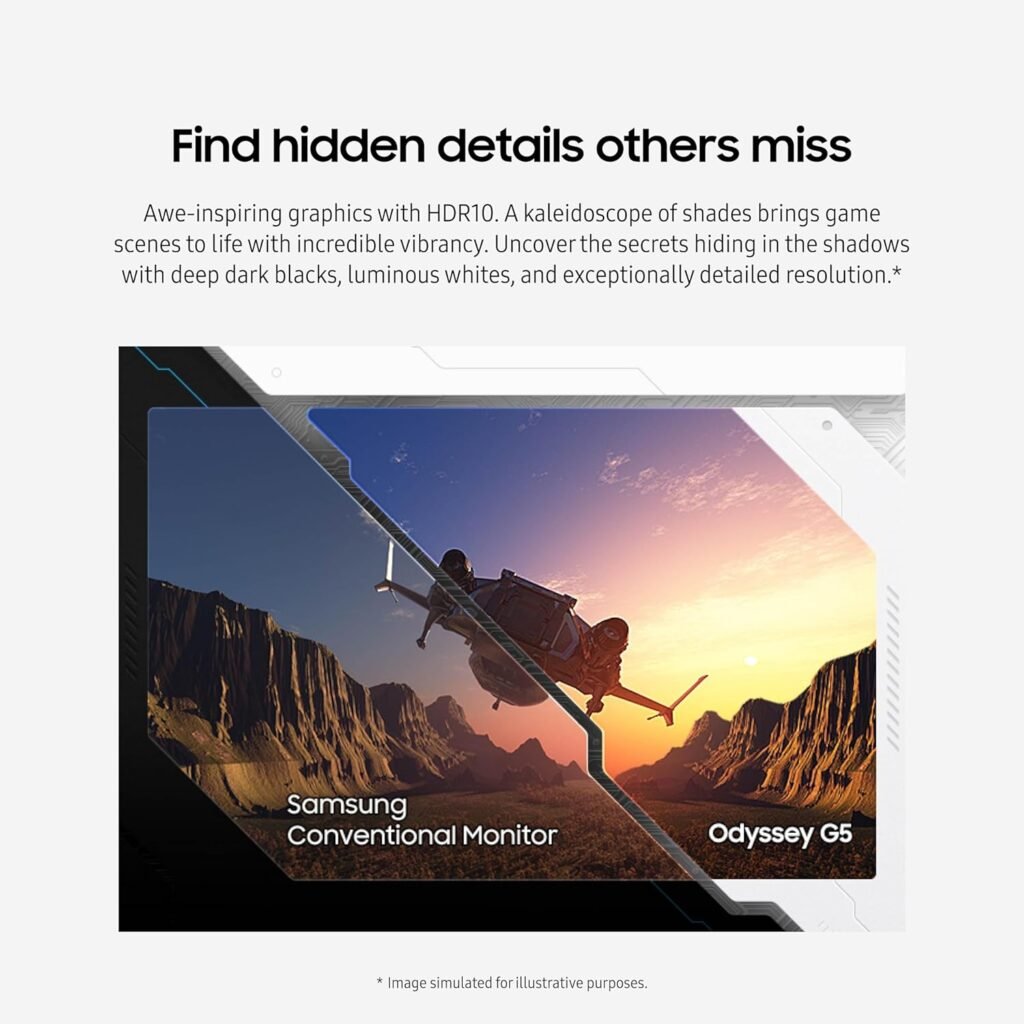
The monitor supports HDR10, which lifts highlights and improves dynamic range over SDR in compatible content. I won’t pretend this is the same HDR experience you get with higher-brightness panels, but HDR10 did reveal punchier highlights and better separation in scenes with both bright and dark regions.
Color is vivid but leans toward punchier, gaming-optimized tuning out of the box. For content-creation-level color accuracy, I’d recommend a calibration step, but for gaming and mixed media use, the pre-sets are enjoyable and engaging.
Motion handling: 165Hz and 1ms(MPRT)
The combination of 165Hz and 1ms MPRT is where this monitor shines for fast-paced games. I tested shooters and racing titles and felt the added refresh and low motion blur genuinely improve my ability to track fast movement.
I noticed less perceived input lag and clearer frames during quick turns and rapid camera pans. The MPRT mode reduces blur by inserting a backlight strobe; this can slightly reduce brightness, but the trade-off is worth it when competitive responsiveness matters.
FreeSync and tearing
I used the monitor with an AMD GPU and toggled FreeSync. The result was smoother gameplay with minimized tearing and stuttering during varying FPS scenarios. Even when FPS dipped below 165, the experience stayed fluid, and I didn’t encounter distracting sync artifacts.
This image is property of Amazon.com.
Brightness, anti-glare, and eye comfort
The matte, glare-free finish performed well in my moderately lit room. I had few reflections from windows or overhead lights. The coating is effective without adding a grainy layer to the image — text stayed crisp.
Eye Saver Mode helped reduce blue light during longer sessions. I often activate it at night to keep my eyes from feeling dry or strained. The flicker-free technology also lowered the sense of fatigue during extended play.
Sound, speakers, and accessories
This monitor is primarily focused on visuals; built-in speakers (if present) are usually basic and adequate for notifications and voice calls, but I relied on my headset for gaming audio. The monitor’s physical controls are easy to reach and responsive.
This image is property of Amazon.com.
Connectivity and ports
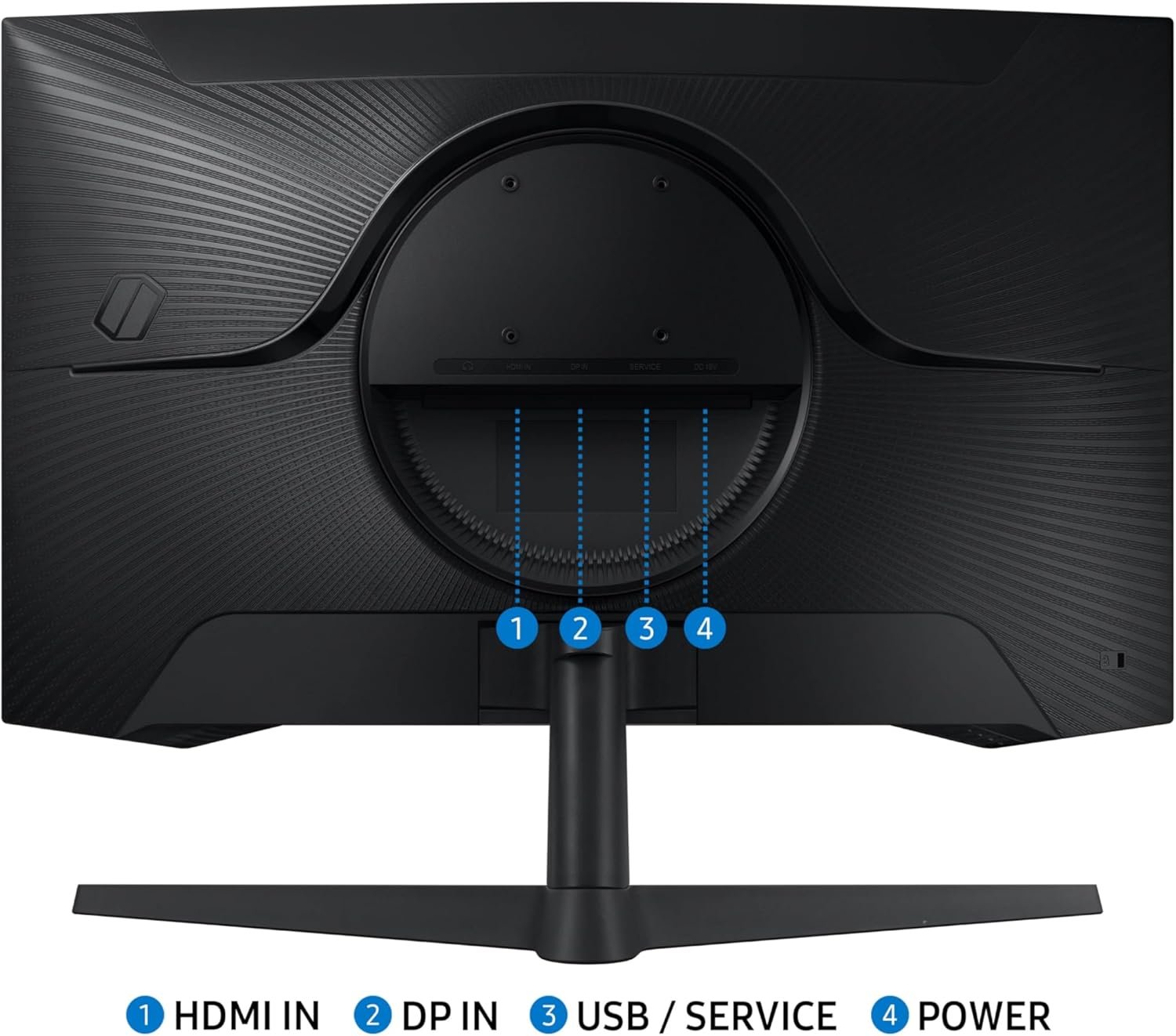
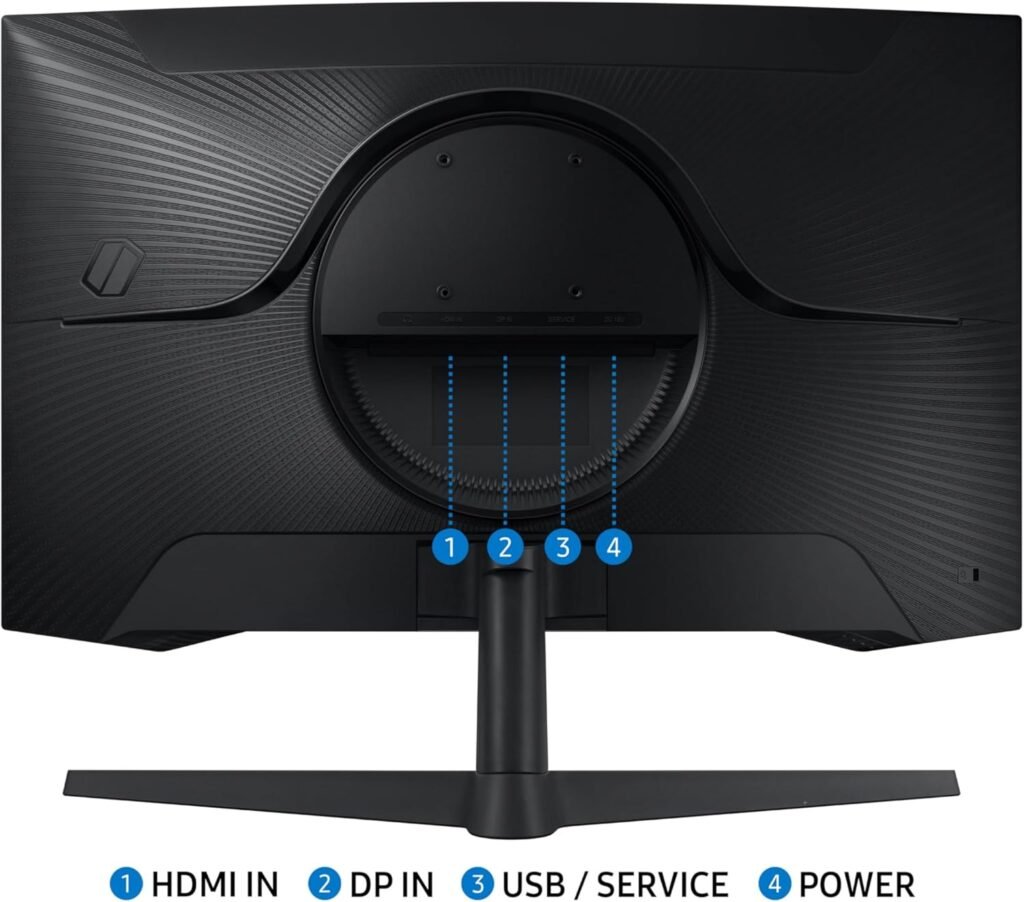
Most buyers should find the available ports adequate for PCs and consoles. The exact number of HDMI and DisplayPort inputs can vary by region or SKU, so I checked the retailer listing before buying. I used a DisplayPort cable for my PC to get the maximum refresh rate at QHD.
Multi-device setup
I connected both a console and my PC during testing. While consoles ran fine at 60-120Hz depending on the console and mode, the PC with DisplayPort unlocked the full 165Hz. Switching inputs was straightforward via the on-screen menu.
Calibration and settings I recommend
Out of the box, the monitor’s “Game” presets are punchy and satisfy the immediate urge for saturated colors. After some use, I adjusted a few settings to balance accuracy and vibrancy:
- Set brightness and contrast to comfortable levels for my room lighting (I found 40–55% brightness suitable).
- Turn on FreeSync (if you have a compatible GPU).
- Enable 1ms MPRT only when you need reduced motion blur (it dims the image slightly).
- Use a standard color preset or sRGB mode for photo work; stick to the default or “FPS” profile for shooters.
- Turn on Eye Saver Mode for evening sessions.
If you need color-critical work, I recommend calibrating with a hardware calibrator or using an ICC profile for the monitor model.
This image is property of Amazon.com.
Gaming experience — real-world impressions
I spent time in competitive shooters, single-player action games, and simulation titles. The higher refresh rate made aiming feel smoother, and the 1000R curve increased immersion without imposing noticeable distortion. In titles with dense, dark scenes, the strong contrast helped me pick out details hiding in shadows.
For simulation and racing games, the wraparound effect of the curve made the cockpit feeling more realistic. The combination of fast refresh, low motion blur, and synced frames made the monitor lively and responsive.
Esports vs immersive single-player
If I’m prioritizing maximum frame rate and the lightest possible input lag for esports, I could see players preferring a 240Hz flat monitor. However, as someone who plays both competitive and story-driven games, I appreciated how the Odyssey G55C strikes a mid-ground: still fast for competitive play while providing immersion for single-player titles.
Productivity and multitasking
The extra pixels and size help when I have multiple windows open. I could comfortably place two documents side-by-side or stick a browser and chat window alongside a game. The curve slightly changes how I arrange windows, but I quickly adapted and appreciated the limited head movement when scanning across the screen.
For spreadsheet and coding work, I enjoyed the additional vertical space vs 1080p, which reduced the need for zooming out or panning.
Pros and cons: my balanced take
I find lists helpful when making a buying decision. Here are the strengths and trade-offs that stood out to me.
Pros
- Immersive 1000R curve that reduces eye movement and adds depth to games.
- QHD resolution on 32″ yields crisp visuals and useful screen space.
- 165Hz refresh rate with 1ms MPRT offers excellent motion clarity.
- AMD Radeon FreeSync reduces tearing and stutter with compatible GPUs.
- HDR10 improves dynamic range for supported content.
- Eye-friendly features: reduced blue light and flicker-free panel.
- Matte, glare-free finish performs well with ambient light.
Cons
- HDR10 implementation is modest compared with HDR on high-brightness monitors.
- Out-of-the-box color tuning skews punchy; calibration recommended for serious color work.
- Built-in speakers (if present) are not a replacement for a dedicated audio setup.
- If you prioritize ultra-high refresh esports (240Hz+), 165Hz may feel limiting.
Alternatives I considered and why I chose this model
I compared this monitor mentally to a few categories: ultrawide 34″-class curved monitors, 27″ 1440p 240Hz flats, and higher-end HDR displays. I chose the Odyssey G55C because it offers a compelling middle ground: immersive curvature, solid refresh rate, and QHD resolution on a large panel.
If you prefer maximum competitive frames, a 27″ 1440p 240Hz flat panel could be better. If you want cinematic expansiveness for single-player RPGs, an ultrawide will give more horizontal field of view. If HDR fidelity is a top priority, a monitor with a higher peak brightness and local dimming will outperform this Samsung.
Setup tips and practical notes
I want people to have a smooth first day with the monitor, so these are steps I used after unboxing:
- Use DisplayPort for the PC connection to reach 165Hz at QHD. HDMI can work but check which HDMI version the monitor uses for high refresh rates.
- Update GPU drivers to ensure FreeSync and high refresh rates are supported.
- Use the OSD (on-screen display) to enable FreeSync, adjust RGB balance, and select eye comfort modes.
- If you play in a bright room, adjust brightness and activate the matte coating’s advantage; reduce contrast if blacks look crushed.
- Test 1ms MPRT in a fast game and turn it off for color-critical tasks.
Who should buy the SAMSUNG 32″ Odyssey G55C Series LS32CG550ENXZA?
I would recommend this monitor to three main types of users:
- Gamers who want a more immersive experience than a flat panel without giving up competitive performance.
- Mixed-use users who play games but also want a large, crisp workspace for productivity.
- Buyers who value eye comfort features and a matte finish to reduce glare during long sessions.
If your primary needs are professional color grading, extreme HDR, or the absolute lowest competitive latency at more than 165Hz, you might look elsewhere. For most players and general users, this monitor hits a strong set of priorities.
Maintenance and longevity
I found the monitor easy to care for. The matte surface resists fingerprints better than glossy panels, and basic screen cleaning with a microfiber cloth kept the display clear. The 1000R curve requires slightly different handling when cleaning to avoid streaking, but standard gentle pressure and circular motions worked fine.
Samsung’s support and warranty policies vary by region, so I recommend registering your product and checking warranty terms shortly after purchase.
Price and value proposition
The value here comes from combining a large QHD panel, a tight curvature, and a gaming-grade refresh rate. Depending on seasonal discounts, the Odyssey G55C can represent strong value compared with ultrawide panels or higher-end HDR-capable monitors. For the experience it delivers — especially for casual to serious gamers who also want everyday usability — I felt it was a sensible purchase.
Final verdict
I enjoyed using the SAMSUNG 32″ Odyssey G55C Series QHD 1000R Curved Gaming Monitor, 1ms(MPRT), HDR10, 165Hz, AMD Radeon FreeSync, Eye Care, Glare Free, Sharp Resolution LS32CG550ENXZA. I appreciated the immersive curve, the crisp QHD picture, and the responsiveness of 165Hz combined with 1ms MPRT. The HDR and color are better than basic monitors, though not at the level of elite HDR displays. Eye comfort and anti-glare coatings are practical touches I used regularly.
If I were choosing a single monitor today and my priorities were a mix of immersion, responsiveness, and everyday productivity, this model would be near the top of my list.
Frequently asked questions I encountered
Will this monitor fit on a typical desk?
Yes — the stand is reasonably compact, and the monitor doesn’t demand an oversized footprint. I measured clearance for height adjustment and cord routing; just make sure you have enough depth for a 32″ curved panel.
Is the monitor good for color-sensitive work like photo or video editing?
It’s fine for casual editing but not ideal for critical color work out of the box. Color tends to be punchy, so I recommend calibrating with a colorimeter if you need accuracy.
Can I use this with a console?
Yes. You can connect a console via HDMI. The console will typically run at 60Hz or higher depending on the console and supported modes, but the full 165Hz experience requires a capable PC and DisplayPort connection.
How do I enable FreeSync?
FreeSync is enabled through the monitor OSD and your GPU driver settings. Make sure your GPU supports FreeSync (AMD cards) or G-SYNC Compatible mode (some NVIDIA cards support it) and that your cables and ports support the required bandwidth.
Is the 1000R curve uncomfortable for productivity applications?
Not for me. The curve takes a short adjustment period but then feels natural, especially across a 32″ surface. If you prefer flat panels, personal preference will be the deciding factor.
If you want any specifics about my calibration settings, connector pinouts, or optimal in-game settings for particular titles, tell me which game or task and I’ll share what I used.

Disclosure: As an Amazon Associate, I earn from qualifying purchases.