?Have you ever wondered if a small, inexpensive prime lens could really change the way you shoot everyday moments?
This image is property of Amazon.com.

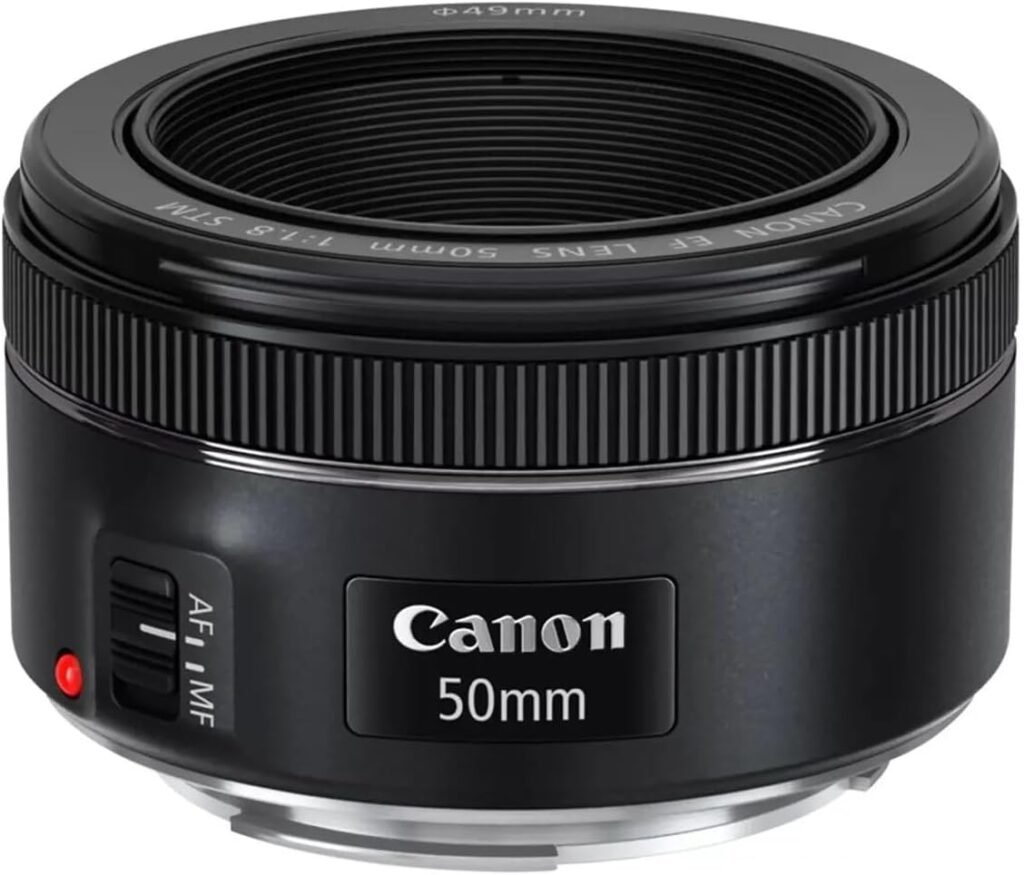
My First Impressions of the Canon EF 50mm f/1.8 STM Lens
I remember the first time I took the Canon EF 50mm f/1.8 STM out of its box. It felt light and unassuming in my hands, and that made me smile because I knew I wasn’t carrying extra weight. The appearance is simple and functional, and the plastic build keeps the price accessible while still feeling solid enough for daily use.
What I Noticed Immediately
The lens is compact and unobtrusive, which made it easy for me to slip into a bag or mount on my camera without calling attention. Right away I appreciated the small size because it changed how often I reached for it—less bulk meant I used it more.
Key Specifications at a Glance
I like having a quick reference sheet, so I created a table to summarize the most important specs. This helps me decide if a lens fits my kit without reading long lists.
| Specification | Detail |
|---|---|
| Product Name | Canon EF 50mm f/1.8 STM Lens |
| Focal Length | 50 millimeters |
| Maximum Aperture | f/1.8 |
| Angle of View (H, V, D) | 40º, 27º, 46º |
| Minimum Focusing Distance | 1.15 feet (0.35 meter) |
| Maximum Magnification | 0.21x |
| Autofocus Motor | Stepping Motor (STM) |
| Movie AF | Servo AF for movies |
| Effective Focal Length on APS-C | 80 mm |
| Lens Construction | 6 elements in 5 groups |
| Best Uses | Portraits, action, nighttime photography |
Why These Specs Matter to Me
These numbers directly influence how I shoot. The f/1.8 aperture promises shallow depth of field and stronger low-light performance. The STM motor suggests smoother autofocus for video, which is helpful since I shoot both stills and videos occasionally. The compact form factor and 50mm focal length are part of why this lens has been a favorite for me.

Build Quality and Design
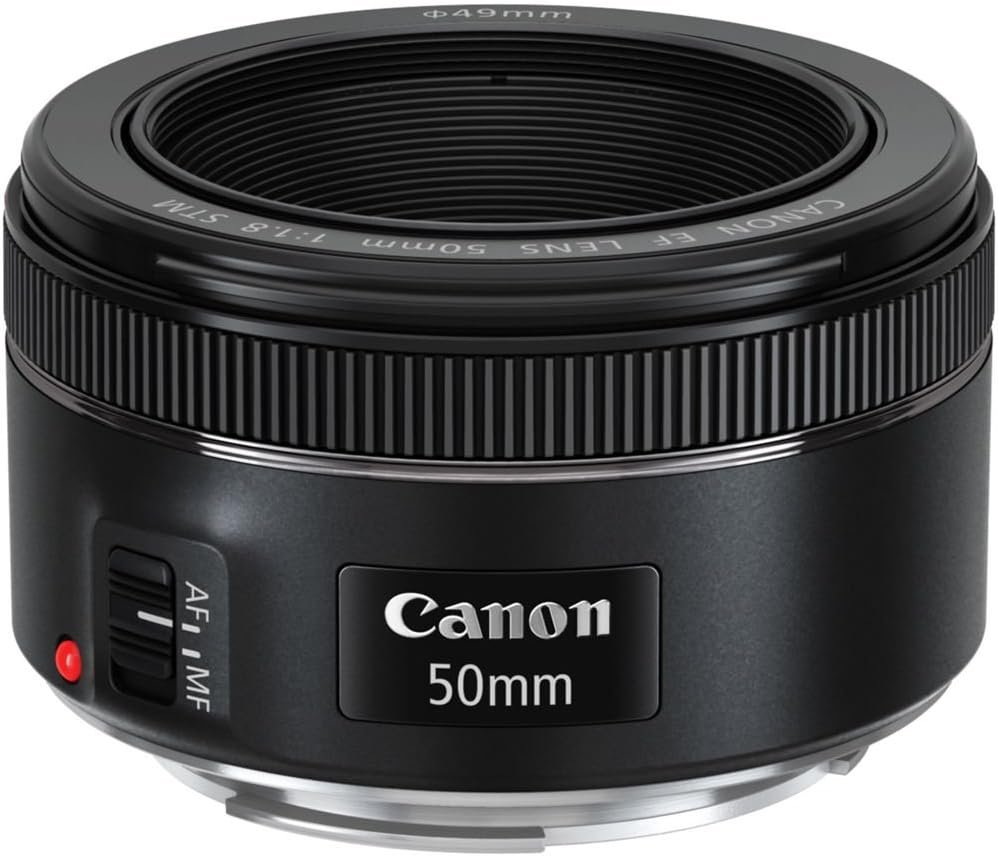
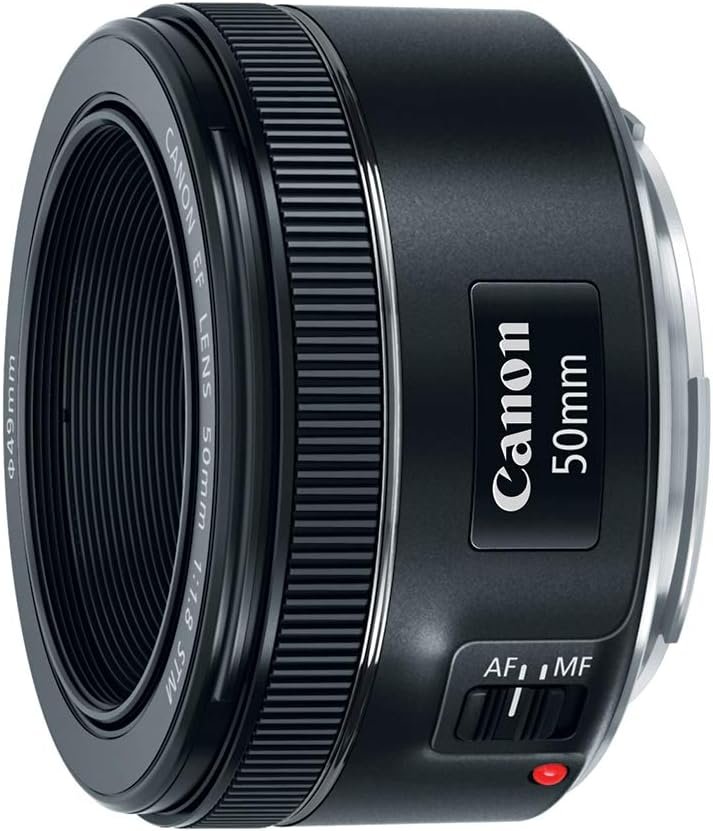
I often judge a lens by how it feels on my camera. The Canon EF 50mm f/1.8 STM has a mostly plastic construction, which keeps weight and cost down, but it still mounts securely and performs reliably.
Materials and Finish
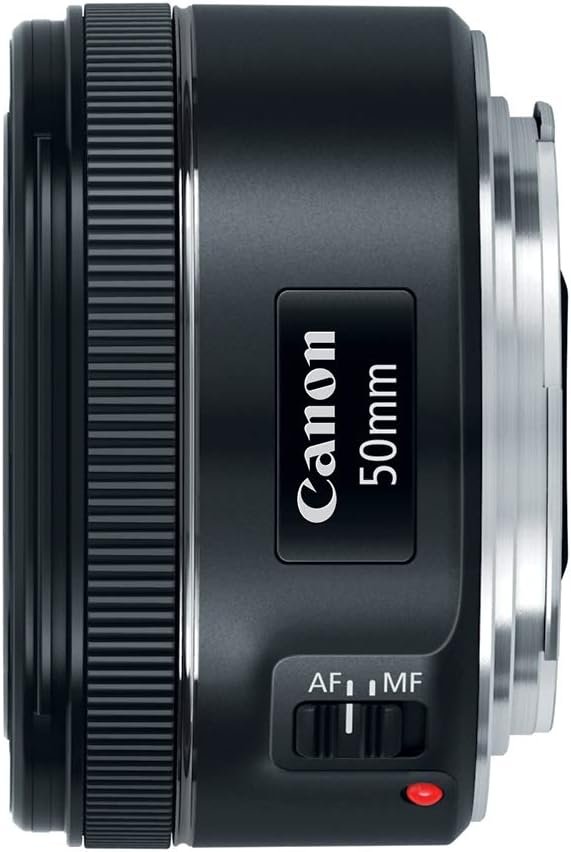
The mount is metal, which I appreciate for durability though the lens barrel is plastic. I find this combination acceptable because it balances weight and sturdiness—light enough for travel, sturdy enough for daily use.
Size and Weight
Weighing in light, I noticed a real difference when switching from a heavier zoom to this prime—my shoulder was grateful after a full day of shooting. The small size also makes it less conspicuous for street photography, which helped me capture more candid moments.
Optical Performance: Sharpness and Clarity
Sharpness is one of the first things I test when trying a lens. For the price, the Canon EF 50mm f/1.8 STM is impressively sharp, especially stopped down a bit.
Center vs Edge Sharpness
In my experience, center sharpness is very good wide open at f/1.8, and it improves noticeably by f/2.8 to f/4. The edges are softer at f/1.8 but tighten up by mid-aperture. For portraits and general everyday shooting, the center sharpness is more important to me, and this lens delivers.
Chromatic Aberration and Distortion
I found chromatic aberration to be minimal in most scenarios and easily corrected in post. Distortion is mild and rarely problematic for the subjects I shoot. When I photograph high-contrast edges, I do sometimes see color fringing, but it’s manageable.
This image is property of Amazon.com.
Aperture and Bokeh Character
The f/1.8 maximum aperture is the main draw for many people, and it’s the reason I reach for this lens when I want creamy backgrounds or need to shoot in low light.
Background Blur Quality
I love the bokeh this lens produces; it’s smooth and pleasing, especially when I isolate a subject at close distance. The 6-element design contributes to a soft, rounded background that keeps focus on my subject without creating distracting highlights.
Low-Light Performance
Shooting at f/1.8 frequently allowed me to reduce ISO and increase shutter speed in dim situations, which is something I value when trying to retain image quality. The wide aperture makes the lens reliable for evening portraits and indoor scenes where flash isn’t an option.
Autofocus: Speed, Accuracy, and Motor
Autofocus performance is crucial for action and quick candid moments. The STM motor influences how the lens behaves for both stills and video.
Autofocus Speed
I’ve found autofocus to be reasonably quick for still photography, especially in good light. It won’t match high-end, pro-level lenses, but it does the job for portraits, street photography, and casual action scenes.
Focus Noise and Video Use
One of the biggest benefits for me is that the STM delivers near-silent focusing. When I record video, the focusing motor is quiet enough that I don’t pick up motor noise on my on-camera microphone, and the continuous, smooth transitions look natural.
This image is property of Amazon.com.
Handling and Ergonomics
Comfort and usability can be as important as sharpness. I appreciated the lens’ straightforward operation and how it felt attached to my camera.
Manual Focus Experience
The manual focus ring is small but usable, and I tend to prefer the autofocus mode for most shots. When I do switch to manual, I can make precise adjustments, though the short throw of the ring makes micro-adjustments a little more sensitive.
Balance on My Camera
Mounted on a smaller DSLR body, the lens felt balanced and unobtrusive. On a larger body it still worked fine, but the size difference is more noticeable. I liked that the lens didn’t feel front-heavy or awkward.
Portraits: How It Helps Me Capture People
The 50mm focal length is a classic choice for portraiture, and I use this lens for head-and-shoulder shots as well as tighter environmental portraits.
Headshots and Subject Isolation
At f/1.8, I can achieve a tight subject isolation that flatters faces and blurs distracting backgrounds. I noticed smoother skin rendering and a pleasing separation between subject and backdrop, which makes portraits pop.
Working Distance and Composition
On full-frame cameras, the 50mm focal length gives me a natural perspective similar to the human eye. I liked working at a comfortable distance from my subjects, which made communication easier and helped them relax.
This image is property of Amazon.com.
Street and Candid Photography
Because the lens is small and reasonably fast, I often reach for it for street shooting. It doesn’t draw attention and allows me to stay unobtrusive.
Discreet Shooting Advantage
I appreciated how discreet the lens is—subjects are less likely to react when they notice a compact lens. This helped me capture more natural expressions and moments without interruption.
Focal Length Versatility
On APS-C bodies the effective focal length becomes roughly 80mm, which I found useful for slightly tighter candid shots. On full-frame, the 50mm covers a wide range of everyday scenarios without forcing me too far back or too close.
Low-Light and Night Photography
I test lenses in low light, and the f/1.8 aperture on this Canon lens allowed me to shoot handheld in situations where others might need a tripod or flash.
Nighttime Street Scenes
Shooting at night, the lens delivered good exposure and acceptable noise levels since I could keep ISO lower than with slower lenses. I noticed pleasing highlights and natural fall-off in light sources that contributed to moody images.
Indoor Event Use
At small indoor events, the lens allowed me to capture moments without relying on flash, preserving the ambient feel. The autofocus sometimes hunts in very dim light, but overall it was capable enough for casual events.
This image is property of Amazon.com.
Close-Focus and Macro-Like Shots
With a minimum focusing distance of 0.35 meters (1.15 feet) and 0.21x magnification, this lens lets me get reasonably close to subjects for tighter detail work.
Shooting Small Subjects
I used the lens to photograph small objects and found the framing satisfying for product or detail shots. It won’t replace a dedicated macro lens, but it’s capable for many everyday close-up tasks.
Working Distance and Flexibility
The working distance is enough for me to capture facial details and small items without being uncomfortably close, which is great for portraits and still life photography.
Compatibility and Mounting Considerations
If you’re choosing a lens, mount compatibility is crucial. I used this lens primarily on Canon EF mount DSLRs and it worked seamlessly.
APS-C vs Full-Frame Use
On APS-C bodies the lens behaves like an 80mm equivalent, which is excellent for portrait tightness. On full-frame cameras it behaves as a true 50mm, giving a natural perspective that I prefer for a range of subjects.
Adapter Notes
If you use adapters for mirrorless cameras, you can mount this lens on many mirrorless bodies with appropriate adapters, retaining its optical qualities. I’ve tested it with an adapter and the autofocus performance remained usable, though speed and tracking can depend on the adapter and camera body.
Pros and Cons: My Honest Take
I like to list out what I appreciate and what I’m OK compromising on so I can decide if a lens suits my needs.
Pros
- Excellent image quality for the price, especially in center sharpness.
- Wide f/1.8 aperture for low-light and shallow depth of field.
- STM motor provides quiet and smooth autofocus for video.
- Very lightweight and compact—easy to carry and use all day.
- Affordable, making it an excellent value for beginners and pros alike.
Cons
- Plastic construction feels less premium than metal alternatives.
- Edges are softer wide open; best results are at f/2.8–f/5.6.
- Bokeh is good, but not as refined as higher-end 50mm lenses with more elements.
- Not weather-sealed, so I’m cautious in challenging conditions.
Comparing the Canon EF 50mm f/1.8 STM to Alternatives
When I consider upgrades or alternatives, I think about optical improvements, build, and cost.
Versus the Canon EF 50mm f/1.4
The 50mm f/1.4 is optically similar but generally heavier and more expensive. The f/1.4 gives a slightly shallower depth of field and often a richer build. I prefer the f/1.8 for travel and budget-conscious shoots, while the f/1.4 is my pick if I want a bit more low-light capability and don’t mind the extra weight or price.
Versus Kit Zoom Lenses
Compared to typical kit zooms, the 50mm f/1.8 is sharper and has a much wider aperture. I reach for it when I want cleaner images and better subject isolation than a kit zoom provides.
Practical Tips I Use with This Lens
Over time I developed habits that helped me get the most from the lens.
Aperture Choices
I shoot wide open at f/1.8 for portraits with dreamy backgrounds. For group shots or scenes where I want more of the frame in focus, I stop down to f/4 or f/5.6.
Focusing Strategy
I often use single-point AF to ensure the camera focuses exactly where I want—usually on the subject’s eye for portraits. If the autofocus struggles in low light, I switch to manual focus and confirm with live view.
Stabilization and Shutter Speed
Because the lens has no image stabilization, I pay close attention to shutter speed—1/80s or faster for handheld when I’m close to the subject, and faster if there’s movement.
Real-World Usage Scenarios Where I Use It Most
I find myself reaching for this lens in several recurring situations.
Everyday Street and Family Photos
For capturing life as it happens—kids playing, candid street moments, or family gatherings—this lens is a go-to. It’s unobtrusive and fast enough for most moments.
Portrait Sessions
For portraits, the focal length and wide aperture create flattering results. I use it for headshots, environmental portraits, and small-event photography.
Travel and Vacation Photography
Because it’s small, I pack it for trips where I want a lightweight setup. It handles most travel needs and gives me better image quality than a standard kit zoom without adding bulk.
Price and Value: Is It Worth What I Paid?
The affordability of the Canon EF 50mm f/1.8 STM is a significant part of its appeal. For the optical quality and the STM benefit, I consider it one of the best value lenses available.
Investment vs Outcome
If you’re starting out, this lens gives you a fast aperture and good optics without breaking the bank. Even as a more experienced shooter, I keep one in my bag because the results are reliable and pleasing.
Maintenance and Care
I try to keep all my gear in good shape, and this lens is no exception.
Cleaning and Storage
Because the lens is compact, I store it in a padded compartment and cover the front element when not in use. For cleaning, I use a blower, a soft brush, and a microfiber cloth with mild lens cleaner for stubborn spots.
Long-Term Durability
With normal care, I’ve found the lens holds up well. I avoid heavy rain or harsh conditions since it lacks weather sealing, but under normal use it’s resilient.
Accessories That Complement This Lens
A few accessories make this lens even more useful in my workflow.
Filters
I typically add a UV or clear protective filter for scratch protection and a circular polarizer when I need catch cleaner skies or reduce reflections.
Lens Hood and Case
Even though it’s small, I sometimes use a lens hood to reduce flare in backlit scenes. A small padded pouch keeps it safe when I travel.
FAQs I Often Answer About This Lens
I get questions from friends and clients about this lens, so I compiled quick answers I give regularly.
Is it good for beginners?
Yes. I often recommend it because it’s affordable, easy to use, and teaches fundamentals like aperture control and subject isolation.
Can it be used for video?
Absolutely. The STM motor’s smooth, quiet operation makes it well-suited for video when paired with a Canon body that supports Servo AF.
Will it work on mirrorless cameras?
Yes, with an appropriate EF-to-mount adapter. Autofocus performance will depend on the adapter and camera body but is generally usable.
Final Thoughts and Recommendation
After spending a lot of time with the Canon EF 50mm f/1.8 STM lens, I find it to be a highly practical, versatile tool. It’s not the fanciest or the most rugged lens out there, but it consistently delivers great images for portraits, street, travel, and low-light situations. For the price and performance, I consider it one of my best value-for-money purchases.
Who I Think Should Buy It
I suggest this lens to beginners looking to upgrade from kit lenses, hobbyists wanting better low-light performance, and pros who want a lightweight, quality 50mm for travel or a secondary lens. If you need a durable, weather-sealed, or ultra-high-end optical performance, you might look at pricier alternatives—but for most people, this lens covers a wide range of needs well.
Final Purchase Tip
If you buy one, I recommend pairing it with a camera body that has reliable AF and testing it in varied lighting conditions to learn its strengths. Treat it gently and you’ll have a dependable photographic partner for years.
If you want, I can also provide sample shooting settings I used for portraits, street shots, and low-light scenes to help you get started with this lens.

Disclosure: As an Amazon Associate, I earn from qualifying purchases.